

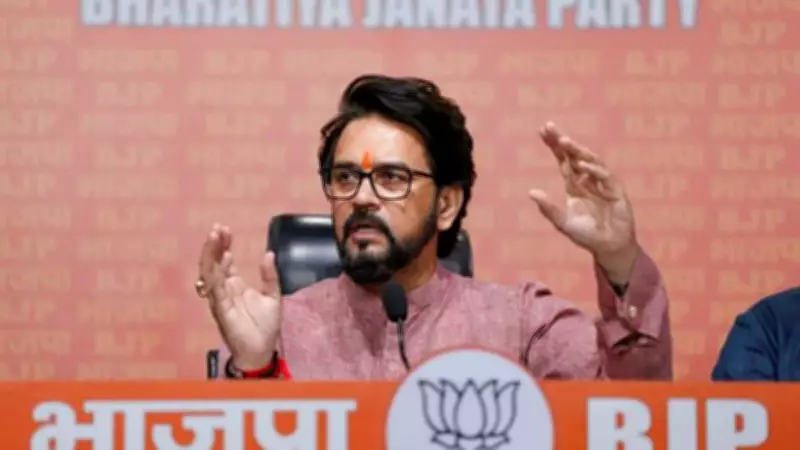
Weak Tax Efforts and High Expenditure Behind RDG Discontinuation: Anurag Thakur Counters Sukhu's Claims
Former Union Minister and BJP MP from Hamirpur, Anurag Thakur, has strongly countered Himachal Pradesh Chief Minister Sukhvinder Singh Sukhu's remarks regarding the discontinuation of the Revenue Deficit Grant (RDG) by the 16th Finance Commission. Thakur emphasized that the RDG was always intended as a temporary, time-bound measure and its cessation is rooted in fiscal realities observed across several states.
Constitutional Concerns and Political Disappointment
On Sunday, Chief Minister Sukhu had termed the RDG discontinuation as a potential violation of Article 275(1) of the Indian Constitution. He expressed deep disappointment, stating that Himachal Pradesh saw no significant announcements in the recent Union Budget and felt the state was given mere token gestures instead of substantial financial assistance. "My primary focus was on RDG and the 16th Finance Commission. Sadly, both have disappointed us," Sukhu remarked, adding that the hill state received a 'jhunjhuna (a rattle)' in the name of grants.
Thakur's Fiscal Explanation and Data-Driven Rebuttal
In his detailed response, Anurag Thakur clarified that the 16th Finance Commission did not recommend continuing the RDG due to consistently weak tax collection efforts and persistently high patterns of committed expenditure observed in several states, including Himachal Pradesh. He urged the public not to be misled by what he called "Congress's hollow claims."

Thakur presented compelling budget data to support his argument:
- According to budget estimates for the fiscal year 2025-26, Himachal Pradesh's post-devolution receipts have actually increased significantly.
- The state's receipts rose from Rs 11,561.66 crore to Rs 13,949.97 crore, marking a substantial gain of nearly Rs 2,388 crore.
He explained that the RDG under the 15th Finance Commission was specifically designed as a front-loaded, transitional measure. Its primary purpose was to help states recover from the economic impacts of the COVID-19 pandemic, with the goal of bringing their fiscal deficits close to zero by the 2025-26 period.
The 16th Finance Commission's Rationale and Comparative Analysis
Thakur elaborated that after a thorough review of outcomes, the 16th Finance Commission concluded that despite large-scale RDG transfers, many states failed to strengthen their own revenue collection mechanisms or rationalize their expenditure patterns. Continuing the grant, the commission feared, would create "distorted incentives" and reduce the pressure for much-needed structural fiscal reforms.
To illustrate the point, Thakur provided a comparative analysis between Himachal Pradesh and the neighboring state of Uttarakhand:
- Fiscal Health: Himachal recorded a fiscal deficit of approximately 5.3% and a revenue deficit of about 2.6%. In contrast, Uttarakhand posted a healthier fiscal deficit of ~2.5% and even achieved a revenue surplus of ~1.1%.
- Liabilities: Himachal's liabilities stood at around 42.8% of its Gross State Domestic Product (GSDP), significantly higher than Uttarakhand's ~25.5%.
- Spending Patterns: Himachal's apex share was relatively lower, indicating that a larger portion of its budget is dedicated to revenue expenditure and debt servicing rather than productive investment in development and infrastructure.
Thakur also defended the central government's approach, stating that the Modi administration does not discriminate against states. He noted that several opposition-ruled states have also benefited from the 16th Finance Commission's revised horizontal redistribution formula. This new formula increased the weightage for population and demographic performance, added a 10% weightage for GDP contribution, while reducing the weightage for geographical area.

Congress's Continued Criticism and Allegations of Injustice
Meanwhile, Congress leaders in Himachal Pradesh have continued their sharp criticism of the Union Budget. Deputy Chief Minister Mukesh Agnihotri labeled the discontinuation of the RDG, coupled with the earlier withdrawal of GST compensation, as a "double blow" to the state's economy. He estimated this would result in an annual financial loss exceeding Rs 10,000 crore for Himachal.
Agnihotri argued that hill states with limited inherent revenue sources were already struggling after the GST compensation period ended. "The abolition of RDG... an institutional safeguard for states like Himachal, has now delivered a second severe shock," he stated, characterizing it as a long-term crisis rather than a temporary setback. With a total state budget of around Rs 58,000 crore, a major share is already committed to salaries, pensions, and other mandatory expenditures.
The financial stakes are high:
- Over the last five years, Himachal Pradesh had received approximately Rs 38,000 crore through the RDG mechanism.
- The state government had anticipated this figure rising to nearly Rs 50,000 crore, accounting for inflation and rising costs.
Himachal Pradesh Congress Committee (HPCC) president Vinay Kumar alleged that the RDG was discontinued to settle political scores with the Congress-led state government for its decision to implement the Old Pension Scheme (OPS), which he affirmed would continue. He further criticized the budget for lacking direction and failing to provide adequate support for disaster relief, tourism, agriculture, horticulture, and the hydropower sector.
Adding to the critique, HPCC spokesperson Sanjeev Gandhi accused the Centre of "fooling" the people with symbolic announcements like projects for the Himalayan region and hiking trails, while remaining conspicuously silent on crucial issues like compensation for natural disasters that frequently impact the state.
The debate underscores the deep political and fiscal tensions surrounding central grants and highlights the ongoing challenges faced by special category states like Himachal Pradesh in managing their finances amidst changing national fiscal policies.





