

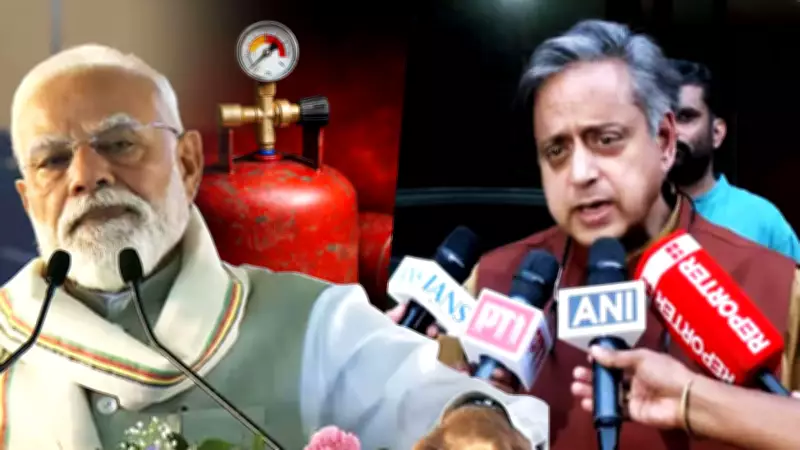
Shashi Tharoor Challenges Modi Government on LPG Shortages in Rural Areas
Congress Member of Parliament Shashi Tharoor has publicly questioned the claims of the Modi-led government regarding the availability of Liquefied Petroleum Gas (LPG) across India. In a critical statement, Tharoor highlighted significant concerns about LPG shortages, particularly affecting rural households, which rely heavily on cylinder gas for daily cooking needs.
Rural Transition to LPG Faces Distribution Hurdles
Tharoor pointed out that while supplies of other fuels such as petrol, diesel, and kerosene remain stable, the increasing shift from traditional fuels like wood and coal to LPG cylinders in villages has created new challenges. This transition, aimed at improving energy access and reducing pollution, is being hampered by inconsistent LPG availability, leading to disruptions in daily cooking routines for millions of families.
The MP emphasized that such shortages not only inconvenience households but also threaten energy security in these regions, where access to reliable fuel sources is crucial for basic sustenance and economic activities.

Call for Collective Action and Improved Distribution
In response to these issues, Tharoor stressed the urgent need for collective efforts to address the LPG shortage swiftly. He called for concrete steps to ensure smoother distribution networks, especially in rural areas, so that households can access cylinders without difficulty. This includes enhancing logistics, increasing supply chain transparency, and implementing targeted policies to bridge the gap between urban and rural fuel access.
Tharoor's remarks come amid broader discussions on energy security in India, where the government has promoted initiatives like the Ujjwala Yojana to expand LPG coverage. However, his critique suggests that implementation gaps persist, requiring immediate attention to prevent further hardships for vulnerable populations.
Impact on Daily Life and Energy Security
The LPG shortages highlighted by Tharoor have real-world consequences, as many rural families depend on cylinder gas for cooking due to its efficiency and environmental benefits compared to traditional fuels. Disruptions in supply can force households to revert to less efficient or harmful alternatives, undermining health and environmental goals.
Tharoor's intervention underscores the importance of reliable energy access as a cornerstone of development, urging policymakers to prioritize solutions that ensure no family is left behind in India's energy transition.






