

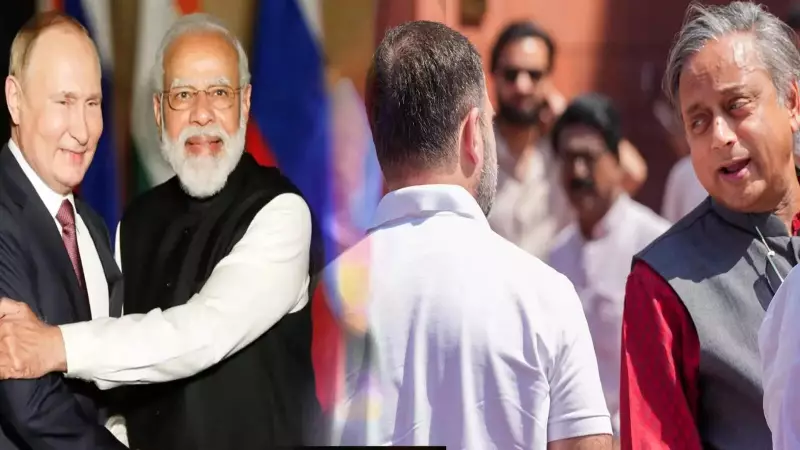
A high-profile state banquet for Russian President Vladimir Putin in New Delhi has become the epicenter of a significant political controversy. The event, held on December 5, 2025, saw an unexpected guest list that has ignited debates over protocol, politics, and diplomatic messaging.
The Unexpected Guest and the Conspicuous Absence
According to reports, Congress MP Shashi Tharoor was the only senior Opposition figure to receive an invitation to the President's high-profile dinner in honour of Vladimir Putin. This development placed Tharoor, a former diplomat and Minister of State for External Affairs, at the centre of the diplomatic stage.
Meanwhile, the absence of an invitation for Rahul Gandhi, who holds the position of Leader of the Opposition (LoP) in the Lok Sabha, did not go unnoticed. Gandhi promptly accused the government of deliberately blocking a customary meeting between the LoP and the visiting Russian head of state. He pointed out that this interaction was a decades-old tradition followed during the tenures of former Prime Ministers Atal Bihari Vajpayee and Dr. Manmohan Singh.

Decoding the Diplomatic and Political Signals
Shashi Tharoor, commenting on his invitation, described it as a "very important gesture." He used the opportunity to praise symbolic diplomacy and subtly underscored India's historically strong and long-standing ties with Russia. His presence at the strategically significant dinner has, however, fueled intense political speculation across several fronts.
The key questions dominating political circles are:
- Is the current government deliberately sidelining Rahul Gandhi on the international stage?
- What specific message is the selective invitation intended to send to global powers like Moscow and Washington?
- How does this move play into domestic political rivalries?
The incident transcends a simple guest list issue, touching upon the delicate power optics of international engagements. It presents a protocol puzzle, challenging established norms for engaging with the Opposition during major state visits.
Broader Context and Implications
This diplomatic drama unfolds against a complex geopolitical backdrop, where India is navigating its relationships with major powers. The Putin visit and the surrounding events highlight the political undercurrents that often shape India's foreign policy engagements. The government's decision regarding the banquet invites is being scrutinized as a potential signal of its approach towards both international diplomacy and domestic political opposition.
The controversy ensures that the narrative around President Putin's visit is as much about internal political dynamics as it is about bilateral relations between India and Russia. The move has undoubtedly added a new layer of intrigue to India's political and diplomatic landscape.






