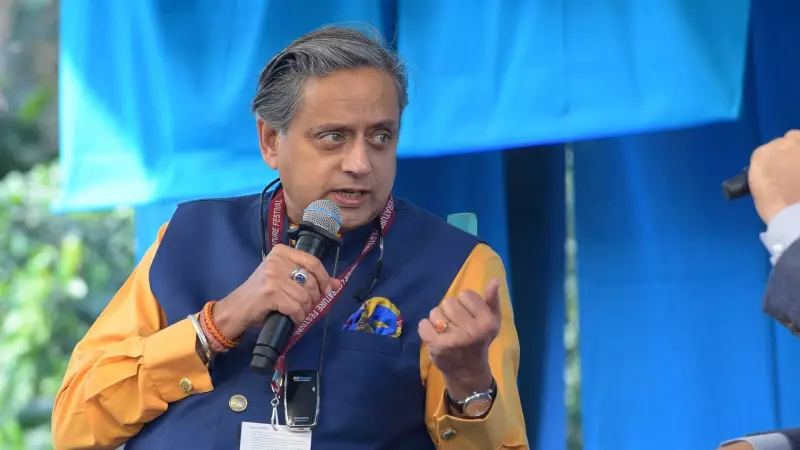
In a move that has stirred political debate, Congress Member of Parliament Shashi Tharoor has been invited to the official dinner hosted for visiting Russian President Vladimir Putin at Rashtrapati Bhavan. The invitation, however, notably excludes the top leadership of his own party, including Leader of the Opposition in Lok Sabha Rahul Gandhi and his Rajya Sabha counterpart Mallikarjun Kharge.
Leaders of Opposition Left Out of High-Profile Event
The dinner, hosted by President Droupadi Murmu on Friday, December 5, 2025, comes during President Putin's two-day visit to India for annual summit talks with Prime Minister Narendra Modi. Sources within the Congress party confirmed to The Indian Express that invitations were not extended to Rahul Gandhi or Mallikarjun Kharge.
This development follows a statement made by Rahul Gandhi just a day prior, where he accused the Modi government of breaking with "tradition" by allegedly preventing him or an Opposition representative from meeting the Russian leader due to the ruling dispensation's "insecurity." The absence of an invitation to the principal opposition leaders appears to substantiate these claims, highlighting a potential diplomatic snub.

Congress Reacts with Caution and Criticism
The party's reaction to Tharoor's solitary invitation has been one of pointed scrutiny. Congress spokesperson Pawan Khera offered a sharp critique, stating, "those who extended such an invitation raise questions, and those who accepted are also open to scrutiny."
Elaborating on the party's stance, Khera added, "Everyone has their own conscience, their own inner voice. Had we been invited instead of our leaders, it is clear that we would not have accepted it." This comment underscores the internal tension and suggests a principled position of solidarity with the sidelined leadership.
Shashi Tharoor himself confirmed receiving and accepting the invitation, telling The Indian Express he would attend the high-profile event at the President's residence.
A Pattern of Independent Stances by Tharoor
This incident is not an isolated episode where the articulate MP from Thiruvananthapuram has found himself at odds with the party line. In recent months, Tharoor has made several public statements that have caused discomfort within the Congress ranks.
In February, he faced criticism from the Congress's Kerala unit after penning a newspaper article that praised the start-up boom in Kerala under Left Front rule, describing the state as "beginning to stand out as a model of economic innovation and sustainable growth."
More notably, last month, he authored a column on dynastic politics that directly antagonized the party's top leadership. In it, he argued that the Nehru-Gandhi family had "cemented the idea that political leadership can be a birthright," and labeled dynastic politics a "grave threat to Indian democracy." He called for trading "dynasty for meritocracy," a view that starkly contrasts with the party's current power structure.
The selective invitation to Tharoor, against the backdrop of these independent commentaries, fuels speculation about the political messaging behind the guest list for the state dinner. It raises questions not only about protocol and tradition in Indian diplomacy but also about the ongoing internal dynamics within the principal opposition party.