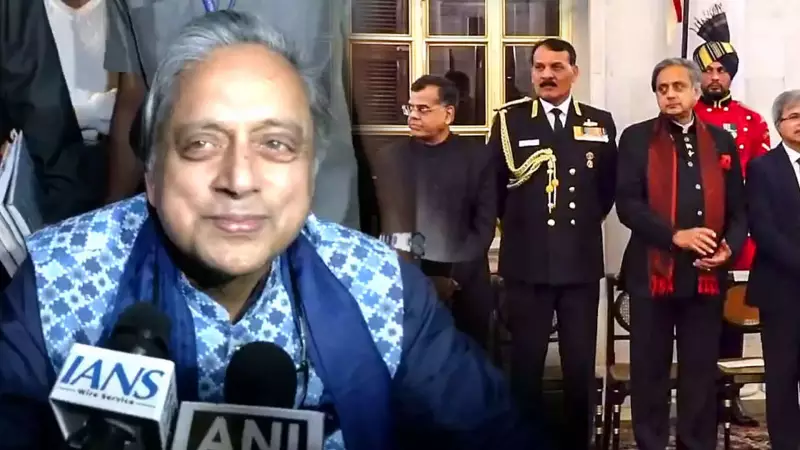
Congress Member of Parliament Shashi Tharoor has publicly addressed the ongoing controversy surrounding his presence at a high-profile state banquet hosted for visiting Russian President Vladimir Putin. The event, held on December 7, 2025, became a point of internal debate after it was revealed that senior Congress leaders Rahul Gandhi and party president Mallikarjun Kharge did not receive invitations.
Tharoor's Clarification and Regret
In his statement, Tharoor expressed clear regret over the exclusion of the opposition leadership from the event. He characterized the situation as "unfortunate" and stated that the presence of Gandhi and Kharge would have been entirely appropriate for a diplomatic occasion of such stature. The MP clarified that his own attendance was solely in his official capacity as the Chairman of the Parliamentary Standing Committee on External Affairs.
Tharoor emphasized the protocol-driven nature of his decision, explaining that he felt it would be improper to decline a formal invitation extended by the President of India. He underscored his role as a representative of a parliamentary committee, which he believed obligated him to attend the state function.

Event Highlights and Internal Fallout
During the banquet, both President Droupadi Murmu and President Vladimir Putin delivered warm and cordial remarks, highlighting the diplomatic nature of the gathering. However, the selective invitations sparked immediate reaction within the Congress party.
Several party leaders questioned the invitation process, leading to internal discussions and debate. The ruling Bharatiya Janata Party (BJP) offered a straightforward explanation, maintaining that Tharoor was invited strictly due to his constitutional parliamentary position and not as a representative of the Congress party.
Broader Political Context
This incident occurs against a complex backdrop of international diplomacy and domestic politics. The controversy touches on sensitive issues of protocol, opposition representation at state events, and India's evolving foreign policy engagements. Tharoor's nuanced position—balancing his institutional duty with party solidarity—highlights the occasional tightrope walked by politicians in such roles.
The episode has ignited conversations about the norms governing invitations to major diplomatic events and the visibility of opposition figures on the national stage during significant bilateral engagements.