

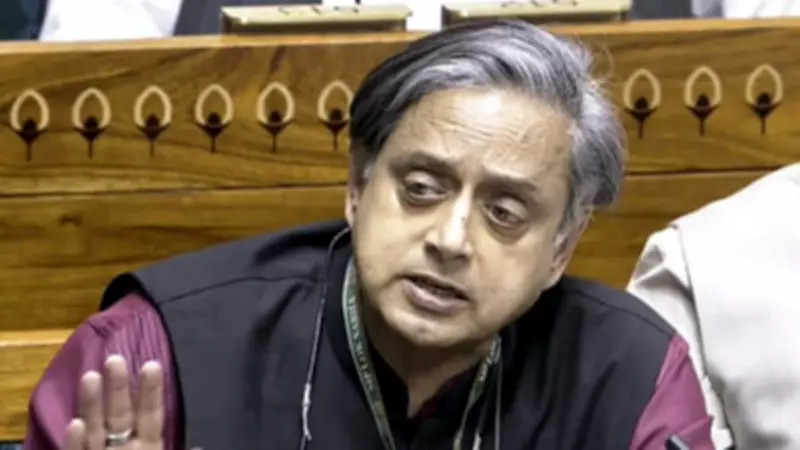
Tharoor Condemns Indo-US Agreement as Departure from Reciprocity
Senior Congress leader Shashi Tharoor has launched a sharp critique of the recent Indo-US bilateral deal, asserting that it fundamentally overturns the long-standing principle of reciprocity in international relations. In a statement issued on February 10, 2026, Tharoor characterized the diplomatic exchanges between External Affairs Minister S Jaishankar and Commerce Minister Piyush Goyal as akin to "playing ping pong," suggesting a back-and-forth dialogue that lacks substantive balance.
Executive Assurance Over Market Demand
Tharoor elaborated on his criticism by highlighting a key economic concern. He argued that the agreement effectively converts what could have been a trade surplus for India into a projected long-term deficit. This shift, according to Tharoor, is not driven by organic market demand or competitive advantage but is instead secured through "executive assurance." This phrase implies that government promises and political arrangements, rather than free-market dynamics, are underpinning the deal's economic outcomes.
The core of Tharoor's argument rests on the principle of reciprocity, which is a foundational concept in diplomacy and trade, ensuring that concessions or benefits granted by one nation are met with equivalent returns from the other. By alleging that this principle has been overturned, Tharoor is questioning the fundamental fairness and strategic value of the agreement for India.

Political Implications and Broader Context
This criticism places the Indo-US deal squarely within the arena of domestic political debate. Tharoor's comments, coming from a prominent opposition figure, signal potential scrutiny and opposition to the government's foreign policy and trade strategies. The involvement of high-profile ministers like Jaishankar and Goyal underscores the deal's significance, making Tharoor's "ping pong" analogy a pointed remark about the negotiation process itself.
The timing of the statement, coinciding with the reported date of February 10, 2026, suggests this is a developing political narrative. It reflects ongoing tensions and discussions regarding India's economic diplomacy and its relationship with major global powers like the United States.
In summary, Shashi Tharoor's critique raises important questions about:
- The abandonment of reciprocal terms in the Indo-US agreement.
- The reliance on executive assurances over market-based mechanisms.
- The perceived transformation of a potential surplus into a long-term deficit for India.
- The nature of high-level diplomatic engagements between Indian ministers.
This development is likely to fuel further debate in political and economic circles about the direction of India's international trade policies and the transparency of its diplomatic accords.






