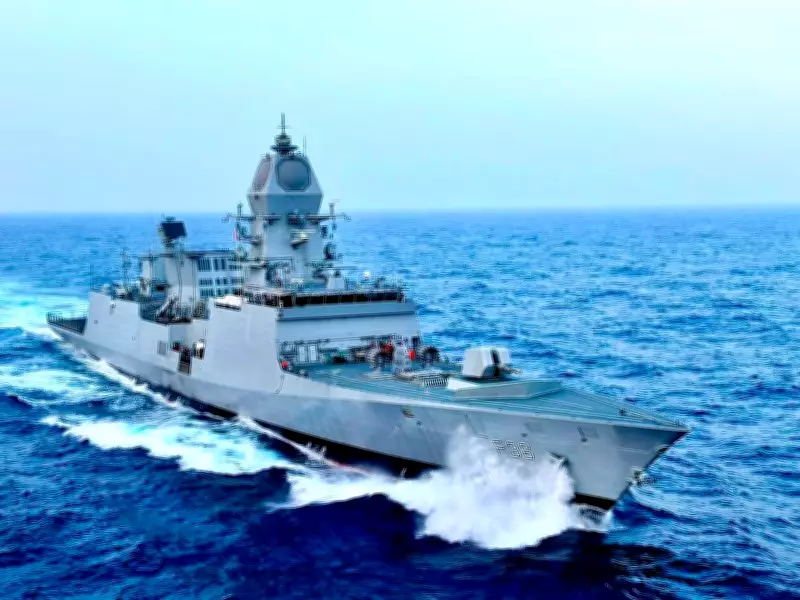
The Indian Navy has commissioned three indigenous warships — INS Dunagiri, an advanced stealth frigate; INS Sanshodhak, a Survey Vessel Large (SVL); and INS Agray, an Anti-Submarine Warfare Shallow Water Craft (ASW-SWC) — as part of its ongoing modernisation drive. The vessels were inducted in a ceremony held at the Naval Dockyard in Mumbai on June 21, 2026.
Key Features of the New Warships
INS Dunagiri, the third ship of the Nilgiri-class stealth frigates, is fitted with the latest weapons, sensors, BrahMos attack missiles, and air-defence systems. It has the ability to operate at sea for extended periods, enhancing the Navy's blue-water capabilities. The frigate is designed for multi-role operations, including anti-surface, anti-air, and anti-submarine warfare.
INS Sanshodhak is a large survey vessel equipped with advanced hydrographic survey systems and multi-beam echo sounders. It will support charting of navigational routes and maritime boundaries, crucial for safe navigation and resource exploration. The ship can also undertake oceanographic and meteorological data collection.

INS Agray is an anti-submarine warfare shallow water craft designed for coastal defence and surveillance. It features indigenously developed sonar systems and torpedo launchers, enabling it to detect and neutralise submarine threats in littoral waters.
Boost to Indigenous Shipbuilding
The commissioning of these vessels underscores India's push for self-reliance in defence manufacturing under the 'Make in India' initiative. According to a Navy spokesperson, the three ships were built by Indian shipyards — INS Dunagiri at Mazagon Dock Shipbuilders Limited (MDL), INS Sanshodhak at Garden Reach Shipbuilders and Engineers (GRSE), and INS Agray at Cochin Shipyard Limited (CSL). The combined construction cost is estimated at over ₹5,000 crore, with indigenous content exceeding 70%.
Strategic Significance
This induction comes at a time when India is expanding its naval fleet to counter growing maritime challenges in the Indian Ocean Region (IOR). The Navy has been prioritising the induction of indigenous platforms to reduce dependence on foreign suppliers. The three vessels will be deployed for missions ranging from surveillance and survey to combat operations.
"The addition of these warships significantly enhances our operational readiness and demonstrates our commitment to a self-reliant defence ecosystem," said Vice Admiral Dinesh K. Tripathi, Chief of the Naval Staff, during the ceremony.
Future Plans
The Navy has outlined plans to induct over 40 ships and submarines in the next decade, with most being built in Indian yards. The commissioning of INS Dunagiri, Sanshodhak, and Agray marks a milestone in this roadmap, reinforcing India's position as a net security provider in the region.