Republic Day Ceremony's Unexpected Viral Moment
Republic Day celebrations across India typically feature grand parades, inspiring speeches, and displays of patriotic fervor. However, this year's observances included an unexpected viral moment that captured nationwide attention, originating not from the capital's grand parade but from a district office in Rajasthan.
The Unplanned Highlight from Barmer
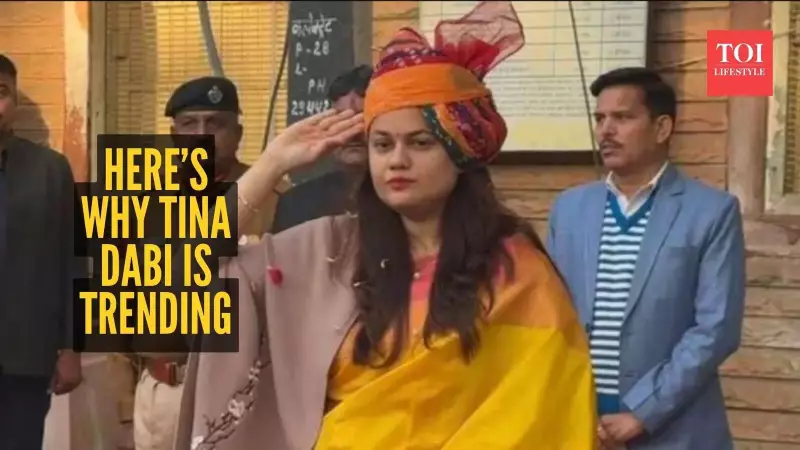
During the Republic Day flag unfurling ceremony at the Barmer District Collectorate, IAS officer Tina Dabi performed her duties as scheduled, hoisting the national tricolour with appropriate ceremony. What followed, however, was a brief but noticeable moment that cameras captured in detail.
As Dabi stood to offer the ceremonial salute following the flag hoisting, she initially faced the wrong direction. The experienced officer paused momentarily, clearly recognizing something was amiss. A fellow official nearby provided a subtle gesture, indicating the correct orientation. Dabi promptly corrected her position and continued with the proceedings.

Social Media Amplifies a Fleeting Moment
What might have been a minor oversight in previous eras became instant internet fodder in today's digital landscape. The approximately 30-second clip quickly circulated across multiple social media platforms, with users analyzing, slowing down, and sharing the moment with various captions.
On platform X, one widely-shared post stated: "UPSC Topper IAS Tina Dabi ji at the Republic Day flag hoisting ceremony at Barmer collectorate office." The video rapidly gained traction, accumulating thousands of views and engagements within hours.
Mixed Reactions from Online Observers
Social media responses revealed a spectrum of reactions to the incident. Some users treated the moment with humor and understanding, characterizing it as an honest mistake anyone might make during formal ceremonies. One commenter noted it demonstrated that "even top officers remain human."
Other reactions proved less forgiving. Critical comments ranged from joking references about "forgetting basics after intensive study" to stronger criticisms of the oversight. This division highlighted how even brief, unscripted moments during official functions can generate significant public discourse in the digital age.
Tina Dabi's Established Public Profile
The viral attention carries particular significance given Dabi's established public profile. Born in November 1993 in Madhya Pradesh, she relocated to Delhi during her teenage years before achieving historic success in the Civil Services Examination.
In 2015, Dabi secured All India Rank 1 in the prestigious examination, becoming the first Dalit woman to achieve this top position. Her professional journey and personal life have frequently attracted media attention since this accomplishment.
Her marriage to fellow IAS officer Athar Aamir Khan in 2018, their subsequent divorce in 2021, and her later marriage to IPS officer Pradeep Gawande have all been documented in public discourse. The couple now has a young son together.
Beyond Achievements: Human Moments in Public Service
This incident represents a departure from the types of stories that typically place Dabi in the public eye. Rather than highlighting another professional achievement or appointment, this viral moment centered on a brief, unscripted occurrence during a routine official ceremony.
The episode serves as a reminder that public servants, regardless of their accomplishments and positions, experience the same human moments as everyone else. In an era where formal ceremonies are meticulously planned and executed, such authentic instances can resonate particularly strongly with observers.
As Republic Day celebrations concluded across the country, this unexpected viral moment demonstrated how digital platforms can transform brief incidents into national conversations, revealing both the scrutiny public figures face and the public's fascination with human elements within formal proceedings.