

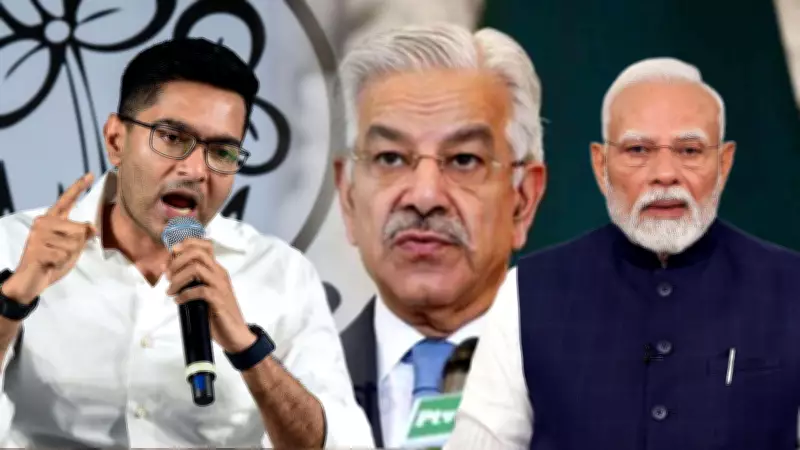
TMC's Abhishek Banerjee Launches Scathing Attack on PM Modi and Amit Shah Over Pakistan's Kolkata Threat
The political landscape in India has been ignited by a fiery response from Trinamool Congress (TMC) leader Abhishek Banerjee, who has strongly criticized Prime Minister Narendra Modi and Home Minister Amit Shah for their perceived silence regarding Pakistan's recent threat against Kolkata. This development comes after Pakistani Defense Minister Khawaja Asif issued a warning that Kolkata could become a target in any future conflict between the two nations.
Banerjee's Aggressive Stance Sparks Nationwide Debate
Abhishek Banerjee, a prominent TMC Member of Parliament, did not mince words in his response to Pakistan's provocative statement. His aggressive rebuttal has now triggered a nationwide political debate, with many questioning the timing and implications of such rhetoric. Banerjee specifically pointed out what he called the "deafening silence" of Prime Minister Modi and Home Minister Shah on this critical national security issue.
The Kolkata threat row has quickly transformed into a significant political flashpoint, especially as India approaches important electoral contests. Banerjee's comments have effectively turned the spotlight on the government's handling of external threats and internal security concerns.

Rising Tensions and Military Posturing
The current situation reflects escalating tensions between India and Pakistan, with Defense Minister Rajnath Singh already warning of a decisive response to any misadventure from across the border. This warning comes against the backdrop of recent security challenges, including the Pahalgam terror attack in Jammu and Kashmir.
India's military response through Operation Sindoor has further complicated the already tense bilateral relationship. The operation, which was launched in response to cross-border terrorism, has demonstrated India's resolve to protect its territorial integrity and national security interests.
National Security Takes Center Stage in Political Discourse
As election season approaches, national security has emerged as a central theme in political messaging across party lines. The Kolkata threat controversy has provided fresh ammunition for opposition parties to question the ruling government's security policies and diplomatic strategies.
The debate now centers on whether strong leadership responses to external threats represent necessary national security posturing or potentially dangerous rhetoric that could escalate tensions further. Political analysts are closely watching how this issue develops, particularly its potential impact on voter sentiment in West Bengal and other key states.
Broader Implications for India-Pakistan Relations
This latest episode adds another layer of complexity to the already strained relationship between India and Pakistan. The public exchange of threats and counter-threats through political channels represents a significant escalation in diplomatic tensions between the nuclear-armed neighbors.
The involvement of high-profile political figures from both countries in this war of words suggests that security concerns will continue to dominate bilateral discussions in the foreseeable future. The situation remains fluid, with potential implications for regional stability and security dynamics in South Asia.






