

Trump's AI-Generated Jesus Image Ignites Blasphemy Controversy
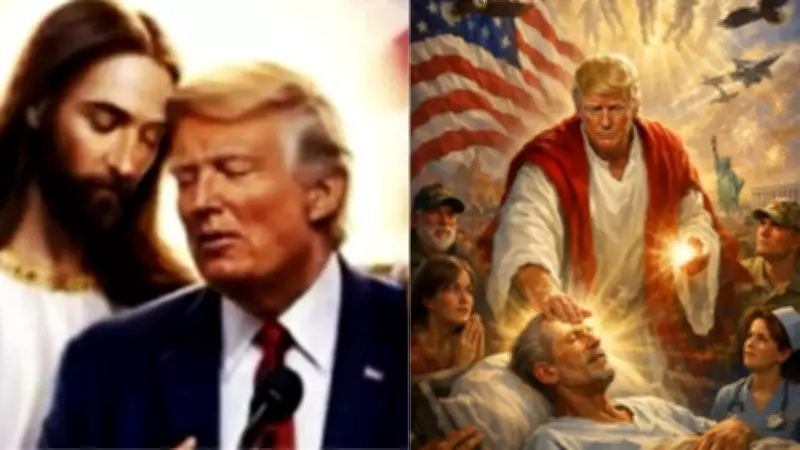
Former President Donald Trump, often referred to as "The Donald" by his first wife, has sparked significant controversy with an AI-generated image that depicted him as a healer, which many critics and even some of his MAGA supporters interpreted as portraying him as Jesus Christ. Trump expressed frustration on Truth Social, dismissing the outcry as a fabrication by "fake news" and insisting the image was meant to show him making people better.
"Only the fake news could come up with that one, so I just heard about it, and I said, 'How did they come up with that?'" Trump complained, defending the post as a representation of his healing abilities. He later removed the image to avoid confusion, only to share another hours later showing Jesus embracing him with an American flag in the background, which he praised as "quite nice."
Escalating Tensions with Pope Leo Over Iran War
Trump also turned his attention to Pope Leo, the first U.S.-born pontiff, criticizing him as "WEAK on crime" and "terrible for Foreign Policy" over his stance on the Iran war. Trump accused the Pope of being soft on Iran's nuclear ambitions and opposed to U.S. actions in Venezuela, claiming credit for Leo's selection as pope.

In response, Pope Leo condemned what he called a "delusion of omnipotence" driving the U.S.-Israel war in Iran, now in its eighth week. "Enough of the idolatry of self and money! Enough of the display of power! Enough of war! True strength is shown in serving life," he declared during a prayer service in Rome. Trump fired back, urging the Pope to focus on religious duties rather than politics.
War Strategy and Diplomatic Concerns
Amid the verbal sparring, Trump vowed to maintain the U.S. blockade of Iranian ports, but reports from NBC suggest he may be seeking an exit strategy from the conflict. A key factor is the upcoming State visit of King Charles III in late April, with Trump expressing concerns about potential logistical issues, such as soggy grass on the South Lawn, that could mar the event.
"King Charles, who's a great guy, we don't want him to sit in a pool of water," Trump told reporters, highlighting his attention to detail amid broader geopolitical tensions.
Health Claims and Political Backlash
Trump also made headlines by promoting diet soda as a cancer prevention method, a claim debunked by medical professionals. Mehmet Oz, a cardiothoracic surgeon and head of the Centers for Medicare and Medicaid Services, supported Trump's assertion on Don Jr.'s podcast, linking it to anecdotal evidence about grass-killing properties.
His erratic behavior, including threats to wipe Iran off the map, has led to perceptions of a "deranged autocrat mad with power," as noted by the New York Times. In response, House Democrats introduced legislation to assess Trump's fitness for office under the 25th Amendment, though it faces low chances of success.
Mass Pardon Promises and Legal Implications
Behind the scenes, Trump has repeatedly promised pardons to his top aides, with reports from the Wall Street Journal indicating he plans mass pardons before leaving office. "I'll pardon everyone who has come within 200 feet of the Oval," Trump was quoted saying, expanding from an earlier radius of 10 feet. To date, he has issued around 1,600 pardons in his second term, often benefiting allies and donors.
While Trump may view these actions as playful, they raise serious concerns for those hoping for stability and reprieve from his unconventional governance style.






