

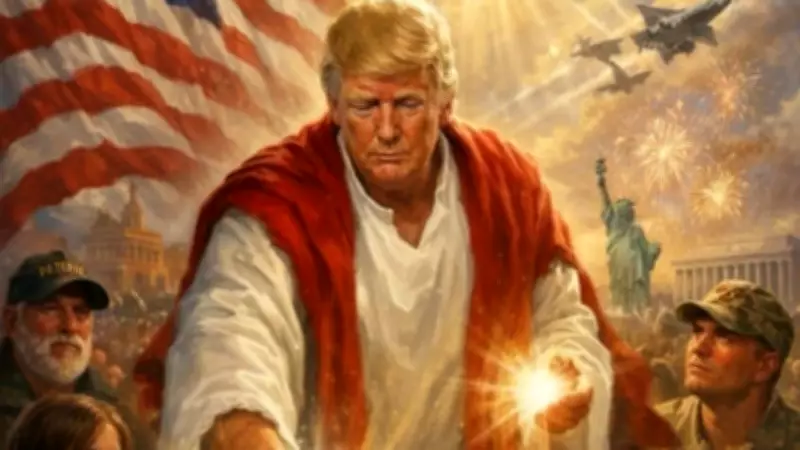
Trump Escalates Feud with Pope Leo XIV, Posts Controversial AI Image
In a dramatic escalation of tensions, former US President Donald Trump launched a sharp public attack on Pope Leo XIV, the head of the Catholic Church, on Sunday night. Trump openly questioned the pontiff's political acumen and expressed strong disapproval of his leadership style.
Trump's Criticism and Social Media Outburst
Speaking to reporters and via social media posts, Trump declared he was "not a fan" of Pope Leo XIV. He accused the religious leader of performing poorly in his role, labeling him as "very liberal" and overly sympathetic to what he termed the "Radical Left." Trump emphasized that the Pope should concentrate on spiritual matters rather than engaging in political commentary, particularly on issues involving US foreign policy and international relations.
AI-Generated Religious Imagery Sparks Debate
Hours after his verbal criticism, Trump posted an AI-generated image that portrayed him in a Jesus-like role, performing a biblical-style miracle. The digitally created picture depicted Trump in flowing robes, placing his hand on a sick man with light radiating from his fingers, while onlookers watched in reverence. This scene closely mirrored the biblical account of Jesus raising Lazarus from the dead, blending religious symbolism with patriotic motifs such as American flags, military aircraft, eagles in flight, and angelic figures in the sky.

The post quickly garnered widespread attention for its stark visual messaging, coming immediately after his public remarks against the Pope. This is not the first instance of Trump utilizing AI-generated religious imagery; in May 2025, he previously shared a picture of himself dressed in full papal robes after joking that he would "like to be pope," an image that also ignited significant online debate and scrutiny.
Background of the Clash
The exchange followed comments from Pope Leo XIV over the weekend, where he criticized what he described as a "delusion of omnipotence" driving global conflicts, including tensions involving the United States and Iran. In response, Trump called the Pope "weak on crime" and "terrible for foreign policy," adding that he did not want a religious leader who appeared to justify adversaries acquiring nuclear weapons.
Trump also suggested that Leo had been chosen partly due to his American background and reiterated his stance that the Church should refrain from interfering in political decisions made by elected governments. This clash highlights ongoing tensions between religious authority and political leadership, with Trump's use of AI imagery adding a modern, technological twist to the controversy.
The incident underscores the intersection of politics, religion, and digital media in contemporary discourse, raising questions about the appropriate boundaries for public figures in engaging with spiritual institutions. As the story develops, it continues to spark discussions on freedom of expression, the role of AI in political messaging, and the dynamics of international diplomacy.






