

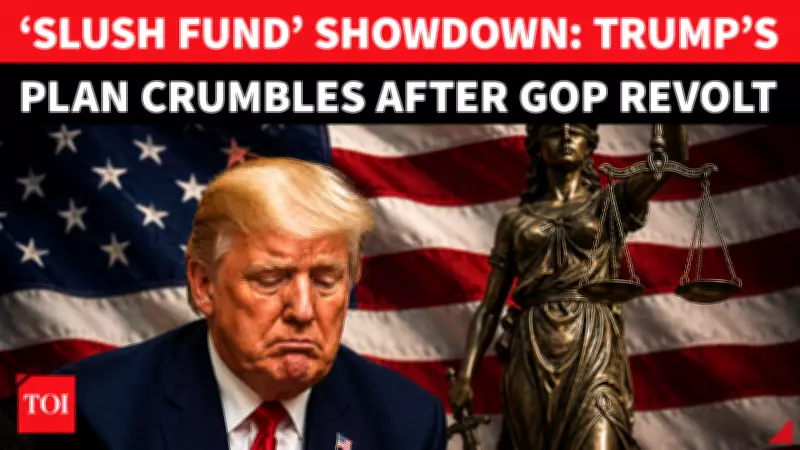
The Trump administration has reportedly informed Republican leaders that it may step back from the contentious $1.8 billion 'anti-weaponization' fund, according to sources familiar with the discussions. However, officials have not confirmed whether this potential retreat is temporary or permanent. The fund, which is tied to Trump's IRS lawsuit settlement, remains blocked by a federal court, casting uncertainty over its future.
Republican Divisions and Democratic Opposition
Republicans are deeply divided over the fund. Some party members are demanding that the fund be scrapped entirely, arguing it lacks transparency and could be misused. Others have expressed conditional support, pending revisions to ensure accountability. Democrats, led by Senate Majority Leader Chuck Schumer, have harshly criticized the proposal, labeling it a 'slush fund' that would allow the administration to bypass congressional oversight.
Legal Challenges and Internal Anger
The fund's legal status is precarious. A federal judge issued an injunction blocking its implementation, citing potential constitutional violations. The administration is weighing its options, including an appeal or a complete withdrawal. Internal GOP anger continues to mount, with some lawmakers threatening to withhold support for other legislative priorities if the fund is not abandoned. The White House has remained tight-lipped about its next steps, but the signal to GOP leaders suggests a significant shift in strategy.

As the controversy unfolds, the fund's fate remains uncertain, with legal challenges, partisan bickering, and internal party strife all playing a role in its potential demise.






