Trump's AI Jesus Image Explanation Sparks 'Doctor' vs 'Doctored' Viral Debate
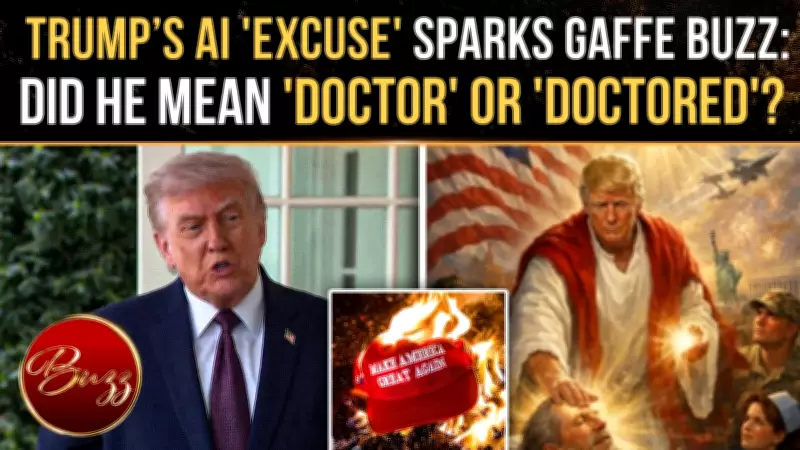
Former President Donald Trump's attempt to clarify a controversial AI-generated image depicting him in a Jesus-like manner has backfired spectacularly, triggering a fresh wave of online confusion and mockery. The incident, which occurred on April 16, 2026, has rapidly evolved into a viral social media storm, with users dissecting Trump's choice of words and their potential implications.
The Controversial Remark and Its Aftermath
In response to the backlash over the AI image, Trump claimed he was portrayed as a "doctor." However, this explanation has only deepened the controversy. Social media platforms have been flooded with theories suggesting that Trump may have actually intended to say "doctored," meaning altered or manipulated, rather than "doctor." This linguistic mix-up has become the internet's latest obsession, adding a new layer of intrigue to an already contentious issue.
The viral theory posits that Trump's remark was either a Freudian slip or a simple verbal error, but either way, it has amplified the scrutiny surrounding the image. Critics argue that if he meant "doctored," it could imply acknowledgment of the image's artificial nature, while supporters dismiss it as a minor gaffe blown out of proportion. The debate has transcended political lines, drawing in users from across the spectrum who are eager to analyze every nuance of the statement.

Why This Gaffe Is Capturing Global Attention
The fascination with Trump's "doctor" remark stems from several factors. Firstly, it taps into ongoing concerns about the use of AI in political propaganda and misinformation. The Jesus-like imagery itself was already controversial, evoking strong reactions due to its religious and symbolic connotations. By adding a verbal blunder to the mix, the situation has become a perfect storm for viral content.
Secondly, the timing is critical, as it comes amid a highly charged political climate where every word from Trump is scrutinized for hidden meanings or mistakes. This incident has reignited discussions about his communication style and its impact on public perception. The hashtags #donaldtrump and #trumpcontroversy have trended globally, reflecting the widespread interest in this unfolding drama.
Moreover, the gaffe has sparked a broader conversation about language and politics. Experts and casual observers alike are debating whether such mix-ups are intentional or accidental, and what they reveal about the speaker's mindset. In an era where social media amplifies every slip, this episode serves as a reminder of how quickly a single phrase can dominate the news cycle.
The Broader Implications for Politics and Media
This incident is not just about a viral meme; it highlights deeper issues in contemporary politics and media. The AI-generated image and its aftermath underscore the challenges of navigating a digital landscape where fabricated content can spread rapidly. Trump's response, whether a gaffe or a strategic move, has shown how easily such events can divert attention from substantive issues to superficial controversies.
As the debate rages on, it remains unclear whether Trump will clarify his remarks or let the speculation continue. What is certain is that this episode has cemented itself as a defining moment in the ongoing saga of Trump's public persona, blending technology, religion, and politics into a potent mix that continues to captivate audiences worldwide. The internet's obsession with this gaffe shows no signs of abating, proving once again that in today's fast-paced media environment, even the smallest details can become major news.