UP Chief Electoral Officer Rejects Allegations of Large-Scale Voter Deletions
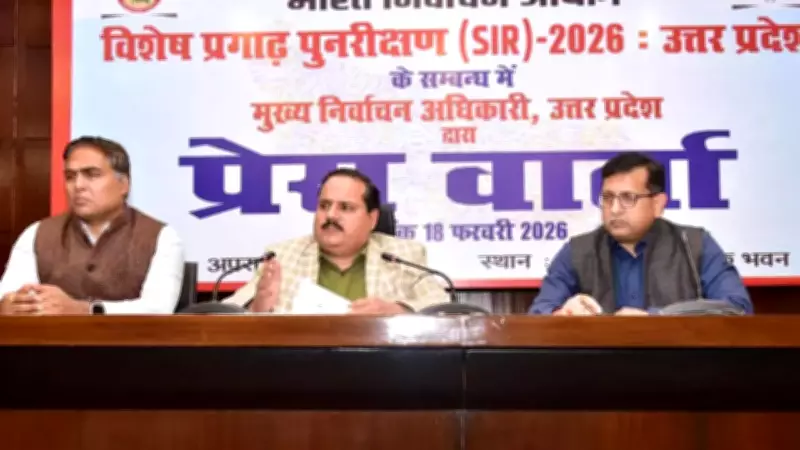
In a detailed press briefing on Wednesday, Uttar Pradesh's Chief Electoral Officer (CEO) Navdeep Rinwa firmly dismissed claims of widespread voter deletions across the state. He clarified that only 4,336 names have been excised from the draft electoral roll, based on Form-7 applications filed by third parties during the claims and objections window under the Special Intensive Revision (SIR) 2026.
Granular Breakdown of Form-7 Applications and Deletions
Addressing what he termed as misinformation, Rinwa provided a comprehensive analysis of Form-7 inflows and outcomes. Between January 6 and February 17, 2026, election authorities received 1.40 lakh Form-7 applications, comprising 55,752 from women, 84,667 from men, and six from the third gender. Expanding the timeline from the SIR-2026 announcement on October 27, 2025, to February 17, 2026, total Form-7 receipts reached 1.89 lakh, including 76,866 women, 1.12 lakh men, and eight third-gender applicants.
Delving deeper, Rinwa explained that from January 6 to February 16, there were 1.35 lakh Form-7 applications. Of these, 70,865 were self-filed by voters regarding their own entries, 16,863 were auto-generated after a voter initiated a transfer request via Form-8, and only 47,684 were filed by another person requesting deletion of someone else's name. Notably, less than 10% of these third-party applications resulted in deletions.

Overall Deletion Statistics and Context
"Against a total of 12.55 crore voters during the claims and objections period from January 6 to February 16, only 23,935 names have been deleted so far," Rinwa stated. He broke down these deletions: 14,388 were due to Form-8 transfers, 5,211 followed the outcome of a voter's own transfer request, and merely 4,336 resulted from third-party Form-7 applications. This underscores that external deletion requests constitute a minor fraction of overall electoral actions.
Progress on Notices and Additions to Electoral Rolls
The CEO also outlined advancements in issuing notices and adding new voters. Following the publication of the draft rolls on January 6, 2026, notices were issued to voters flagged for no mapping—where a voter's record is not properly linked—and for logical discrepancies. In total, 3.26 crore notices were to be issued, with 1.04 crore for no mapping and 2.22 crore for logical discrepancies. As of February 18, 3.25 crore notices have been generated, over 1.85 crore served by Booth Level Officers (BLOs), and about 1.15 crore hearings completed by notified officers.
Rinwa highlighted that hearing throughput has accelerated significantly, with more than 35 lakh hearings conducted in the last three days of the reported period. He expressed confidence that the entire exercise would be completed within the scheduled timeframe.
New Voter Additions and Enhanced Field Capacity
On new additions to the electoral rolls, Rinwa reported that 54.4 lakh Form-6 applications were received between January 6 and February 17, 2026, including 20 lakh from women, 27.19 lakh from men, and 222 from the third gender. This includes 36.76 lakh applications from voters aged 18–29. From the SIR-2026 announcement on October 27, 2025, to February 17, 2026, authorities have received over 70 lakh Form-6 applications.
To bolster field capacity, the number of electoral registration officers (EROs) and assistant EROs has been expanded from 403 and 2,042 at the start of SIR-2026 to a combined total of 13,161. Hearing centres increased from 3,984 to 4,635 as of February 9, with instructions for notified officers to conduct on-site hearings at polling stations to minimize voter travel.