Why the US-Israel vs Iran Conflict Brings India's PRAHAAR into Sharper Focus
The ongoing confrontation between the United States, Israel, and Iran is often analyzed through the lens of conventional military escalation, but it has also unveiled a quieter, yet equally critical, dimension of modern conflict: intelligence penetration and institutional vulnerability. For India, this lesson resonates deeply with PRAHAAR, the nation's first comprehensive counter-terror doctrine, which aims to address these very threats from within.
The Stark Implications of Intelligence Success
Israel's repeated successes in striking deep inside Iran, including a joint operation that reportedly killed Iranian Supreme Leader Ayatollah Khamenei with pinpoint accuracy shortly after the conflict erupted, have raised uncomfortable questions for security planners worldwide. How was such precise intelligence extracted from one of the region's most fortified systems? Reports suggest that years of covert operations by Israel's Mossad provided visibility far beyond the battlefield, with former Iranian president Mahmoud Ahmadinejad even claiming infiltration of Iran's own intelligence apparatus. This starkly illustrates that even powerful states can crumble from cracks within their security structures, not just from external foes.
What is PRAHAAR?
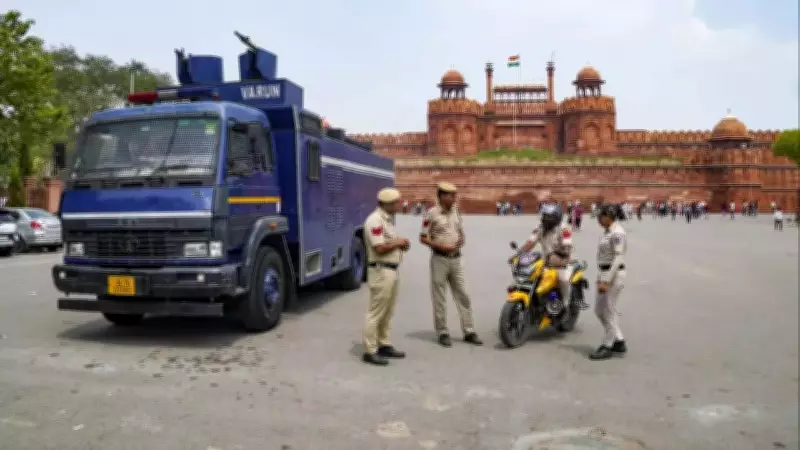
PRAHAAR weaves intelligence agencies, law enforcement, cyber monitoring, and financial tracking into a unified architecture. Its core premise is simple: modern threats rarely manifest as overt invasions. Instead, they seep in quietly via networks, funding streams, and compromised systems that exploit institutional gaps. This reality hit home after incidents like the Red Fort bomb blast in Delhi, where investigators exposed "white-collar" terrorism involving individuals embedded in legitimate systems as financial intermediaries or logistics handlers.

The Israel-Iran conflict transcends distant geopolitical drama by showing how infiltration and internal vulnerabilities can dictate modern warfare outcomes. PRAHAAR is India's answer to these threats, which brew as fiercely within borders as across them.
A Doctrine, Not a Directive
For decades, India has battled cross-border terrorism, with recent events like the April 2025 Pahalgam carnage and a bomb blast near Delhi's Red Fort underscoring the need for a robust response. However, PRAHAAR is not framed as a retaliatory document. It elevates a "pro-active and intelligence-guided" approach into doctrine, with its name as an acronym for Prevention, Response, Aggregation of capacities, Human rights and rule of law, Attenuation of radicalisation, Aligning international efforts, and Recovery.
White-Collar Terrorism: The Invisible Enabler
The 2025 Delhi car explosion revealed that modern terrorism's architects are not always shadowy militants but can include individuals embedded in professional networks, such as medical professionals operating through legitimate channels. This phenomenon, termed white-collar terrorism, thrives in grey zones through financial transfers and digital coordination. PRAHAAR seeks to expand focus from merely responding to attacks to dismantling these invisible ecosystems, confronting the reality that dangerous networks may be embedded within ordinary institutions.
The Expanding Threat Canvas
PRAHAAR outlines an expansive threat profile, referencing neighbors using terrorism as state policy and global groups like Al-Qaeda and ISIS. The battlefield has shifted to include drones for smuggling arms, organized criminal networks for logistics, and social media for propaganda. Challenges include disrupting access to CBRNED materials and countering cyber-attacks by state and non-state actors, blurring traditional lines between physical and digital contests.
Intelligence as the First Line of Defence
At PRAHAAR's heart lies an intelligence-guided prevention model, with platforms like the Multi-Agency Centre facilitating real-time input sharing. The doctrine institutionalizes coordination between central and state agencies, emphasizes proactive disruption of cyber activities, and reinforces border management with modern surveillance tools. When prevention fails, a graded response involves local police, specialized units, and the National Security Guard, with investigative deterrence anchored by the National Investigation Agency.

Law, Liberty, and the Long View
PRAHAAR distinguishes itself from hard-power doctrines by framing counter-terrorism as values-based, grounded in constitutional safeguards and global norms. It uses legal instruments like the Unlawful Activities (Prevention) Act and calls for legal expert involvement in investigations to strengthen cases. Radicalisation receives attention through graded responses and de-radicalisation programs, with community leaders as partners in awareness campaigns.
A National Template Against Terror
The doctrine is shaping institutional reforms, such as a revamped Anti-Terror Squad in Delhi designed for intelligence-led offensives against terror-gangster nexuses. Similar units in states like Maharashtra and Gujarat aim for uniformity in structure and training, ensuring coordination is system-driven, not personality-driven.
Global Partnerships in a Fragmented World
Terrorism respects no borders, so PRAHAAR stresses aligning international efforts through treaties and UN norms. While it does not cite the Middle East crisis, its focus on cooperation reflects an understanding that global instability, like the US-Israel-Iran conflict, can complicate domestic security through ungoverned spaces and radical narratives.
Recovery and Resilience
The final pillar focuses on recovery through a whole-of-society approach, mobilizing professionals and NGOs to reintegrate affected communities. Resilience is framed as India's strongest long-term defence, with calls for periodic legal amendments and better state-level capacities.
In moving from episodic reaction to sustained architecture, PRAHAAR represents a doctrinal consolidation of India's experience, blending intelligence, legal frameworks, technology, and diplomacy into a unified counter-terror strategy.