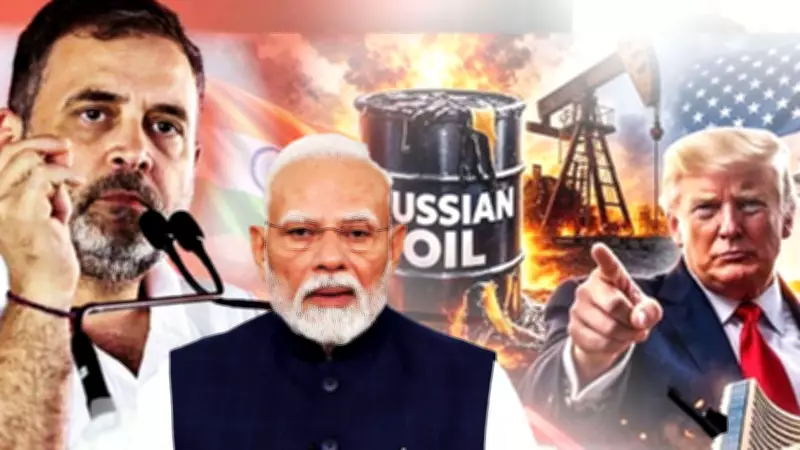
US Waiver on Russian Oil Ignites Political Firestorm in India
A temporary exemption granted by the United States, permitting India to continue purchasing Russian crude oil, has erupted into a fierce political confrontation within the nation's capital. This development unfolds against a backdrop of intensifying geopolitical strains in West Asia, which are jeopardizing global energy supplies and critical maritime shipping corridors.
Rahul Gandhi Launches Scathing Attack on Government
In a sharp and direct response to the waiver announcement, Leader of the Opposition Rahul Gandhi launched a vehement critique against the administration led by Prime Minister Narendra Modi. Gandhi asserted that India's foreign policy decisions are being unduly influenced by external pressures, compromising the nation's strategic autonomy.
"If another nation is determining whether India can procure oil from Russia or Iran, then our sovereignty is fundamentally under threat," Gandhi warned, framing the issue as a critical test of India's independent decision-making capacity on the world stage.

US Rationale and Geopolitical Context
The United States has clarified that this waiver is a temporary measure, strategically implemented to help stabilize volatile international oil markets amidst ongoing conflicts. American officials have concurrently encouraged India to consider increasing its energy purchases from the United States in the future, aiming to diversify supply sources.
This diplomatic move occurs as geopolitical tensions, particularly in West Asia, continue to escalate, placing immense strain on global oil supply chains and heightening concerns over energy security worldwide.
Intensifying Debate Over Strategic Autonomy
The controversy has significantly amplified the ongoing debate surrounding India's strategic autonomy and its long-term energy security framework. Political analysts note that the dispute touches upon core questions of national sovereignty versus pragmatic economic and energy necessities in a complex global landscape.
With India heavily reliant on energy imports to fuel its growing economy, the balance between maintaining diplomatic relationships, securing affordable energy resources, and asserting independent policy has become a central point of contention. The Modi government's handling of this delicate situation is now under intense scrutiny from opposition parties and policy observers alike.
The row underscores the challenging tightrope walk that emerging economies like India must navigate in an increasingly multipolar world, where energy diplomacy often collides with assertions of national sovereignty and strategic independence.