India commemorates the 101st birth anniversary of one of its most revered leaders and former Prime Minister, Atal Bihari Vajpayee, on December 25, 2025. Born on this day in 1924 in Gwalior, Madhya Pradesh, Vajpayee is remembered not just as a senior Bharatiya Janata Party (BJP) stalwart but as a poet-statesman whose tenure shaped modern India.
A Legacy Honored: Memorials and Good Governance
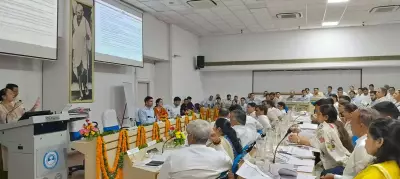
To honor his enduring contributions, December 25 is observed as National Good Governance Day since 2014, promoting the principles of transparent, accountable, and citizen-centric administration that he championed. Marking the occasion, Prime Minister Narendra Modi paid rich tributes to Vajpayee on social media platform X.
PM Modi stated that the birth anniversary of "esteemed Atal Ji" is a moment to draw inspiration from his life. "His conduct, dignity, ideological steadfastness, and resolve to place the nation's interest above all serve as an ideal standard for Indian politics," the Prime Minister wrote. He added that Vajpayee demonstrated that excellence is defined by conduct, not position.

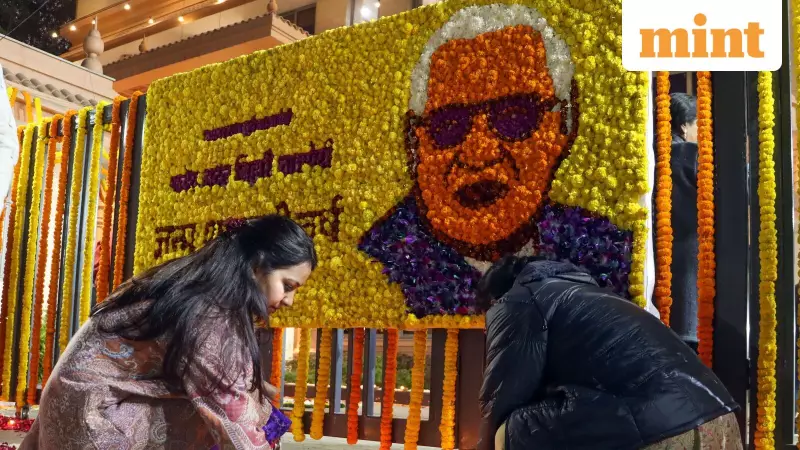
In a significant event, PM Modi inaugurated a landmark national memorial and complex in Lucknow. This ₹230-crore project, named Rashtra Prerna Sthal, will host statues of BJP ideologues Syama Prasad Mookerjee, Pandit Deendayal Upadhyaya, and Atal Bihari Vajpayee, cementing their place in the nation's memory.
The Vajpayee Era: Leadership Through Words and Action
Atal Bihari Vajpayee served as the Prime Minister of India three times—briefly in 1996, and then for two full terms from 1998 to 2004. Renowned for his oratory skills and literary flair, he was unique in his ability to build political consensus across party lines, using dialogue to bridge divides during crucial moments.
His leadership was tested and proven in defining events for the nation. He was conferred the Bharat Ratna, India's highest civilian honour, in 2015. Vajpayee passed away on August 16, 2018, leaving behind a legacy that continues to guide Indian polity.
Echoes of History: Five Iconic Speeches
On this anniversary, his powerful words from historic addresses remind us of his vision and resolve.
1. Announcing India's Nuclear Prowess (Pokhran-II, 1998): On May 11, 1998, Prime Minister Vajpayee addressed the nation to announce the successful conduct of three underground nuclear tests at Pokhran. "Today, at 15:45 hours, India conducted three underground nuclear tests... I warmly congratulate the scientists and engineers," he declared, establishing India's strategic deterrence and capability on the global stage.
2. The Resignation Speech: 'Satta Ka Khel' (1996): Following the fall of his 13-day government in 1996, Vajpayee's speech in the Lok Sabha during a confidence motion became legendary. Emphasizing that the country and its democracy were paramount, he said, "Governments will come and go... but the country should survive." Refuting accusations of lust for power, he stated, "If breaking up political parties is the only way to form a coalition... I do not want to touch such a coalition with a barge pole." He concluded by announcing his resignation with characteristic grace.
Other memorable speeches from his career further highlight his commitment to national unity, economic progress, and democratic integrity.
Key Takeaways for a Nation
Atal Bihari Vajpayee's life offers timeless lessons. His integrity and conduct set a high benchmark for leadership in public life. The annual observance of National Good Governance Day underscores the perpetual need for transparency and accountability in administration. Perhaps most relevant today is his demonstrated ability to forge consensus across the political aisle, a vital lesson for contemporary politics focused on collaborative nation-building.
As statues rise in his memory, his words and deeds continue to inspire a nation, reminding everyone that the true strength of a democracy lies in its principles and the character of its leaders.