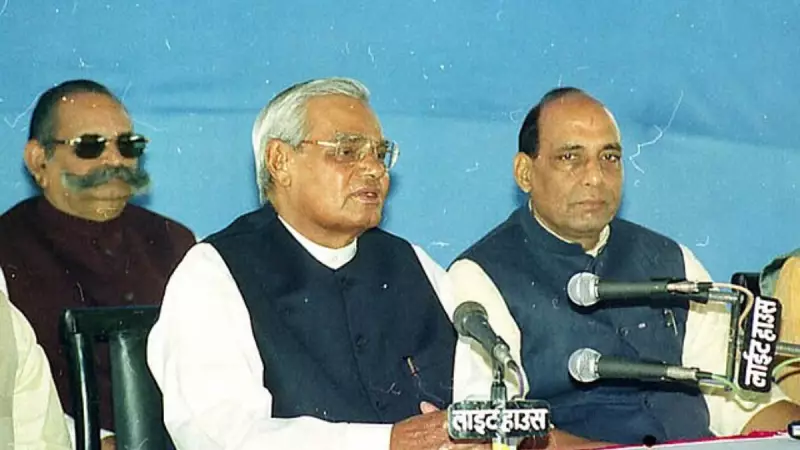
As India commemorates the birth anniversary of former Prime Minister Atal Bihari Vajpayee on December 25, his towering political legacy is remembered for its oratory, governance, and a unique electoral feat that remains unmatched in the nation's parliamentary history.
An Unparalleled Electoral Journey
Atal Bihari Vajpayee holds the singular distinction of being the only Indian politician to have been elected to the Lok Sabha from six different constituencies. These constituencies spanned across four diverse states, showcasing his pan-Indian appeal and formidable political acumen. His electoral journey reflects a career built on widespread public trust and strategic political movement.
His first foray into the Lok Sabha was in 1957 from the Balrampur constituency in Uttar Pradesh. He later represented constituencies in multiple states, a testament to his national stature. This record is not just a number but a narrative of a leader who connected with voters from the Gangetic plains to the heart of central India.

The Six Seats That Defined a Career
Vajpayee's electoral map is a fascinating study. After Balrampur, he won from New Delhi in 1977 during the Janata Party wave. He then represented his hometown, Gwalior in Madhya Pradesh, in 1991. In a significant move, he contested and won from Lucknow, Uttar Pradesh, in 1991 as well, a seat he would make synonymous with his name for years.
His strategic shifts continued. He was elected from Gandhinagar, Gujarat, in 1996, though he chose to retain Lucknow. Earlier in his career, he had also served as a Member of Parliament from Mathura in Uttar Pradesh, rounding out his six-seat tally. This mobility is unprecedented, with most politicians building a career around a single stronghold.
The Legacy of a Statesman-Politician
This remarkable electoral record underscores more than just winning campaigns. It highlights Vajpayee's unique position as a national leader whose appeal transcended regional and linguistic boundaries. His ability to win from north, west, and central India is a rare achievement in a country often defined by regional political strongholds.
His tenure as Prime Minister, especially between 1998 and 2004, was marked by pivotal moments like the Pokhran-II nuclear tests and the push for infrastructure development. Yet, his grassroots connect, evidenced by this electoral history, remained the bedrock of his popularity. He was a leader who could navigate the complexities of coalition politics while maintaining a direct rapport with the electorate in diverse regions.
On his birth anniversary, celebrated as Good Governance Day, this facet of his career reminds us of a politician who was both a visionary statesman and a formidable electoral strategist. His record of six Lok Sabha seats across four states stands as a towering milestone, one that future politicians may aspire to but has yet to be replicated.