

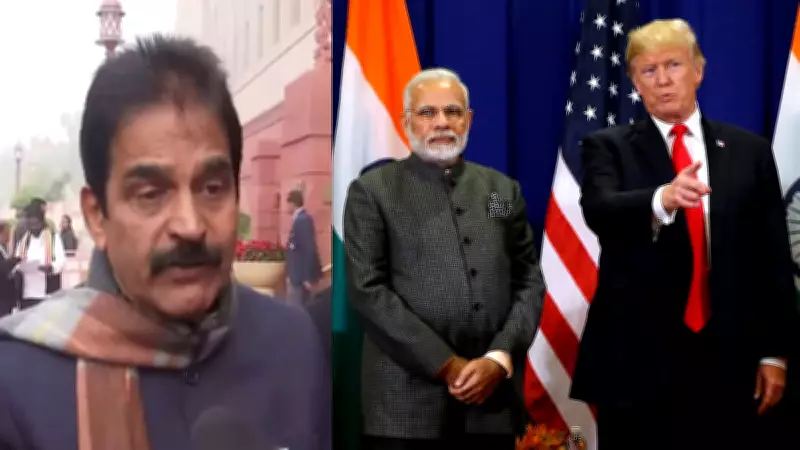
Congress Leader KC Venugopal Slams India-US Trade Agreement, Draws Parallel to Capital Shift
Senior Congress leader KC Venugopal has launched a scathing critique of the recent India-United States trade agreement, using vivid political rhetoric to express his disapproval. His comments came in response to the bilateral pact that significantly reduced tariffs on certain goods, a move that has sparked debate in political circles.
Venugopal's Sharp Remarks on the Trade Deal
Speaking about the India-US trade agreement, which notably lowered the tariff from a substantial 50 percent to 18 percent, Venugopal did not mince words. He stated, "Looking at recent events, it seems as if India's capital has shifted from New Delhi to Washington, DC, and Prime Minister Narendra Modi has gone on a long vacation." This metaphorical statement highlights his view that the deal may compromise India's sovereignty or decision-making autonomy, suggesting an over-reliance on American influence.
Context of the India-US Trade Agreement
The trade agreement in question marks a pivotal moment in bilateral relations, aiming to boost economic ties between the two nations. By reducing tariffs, it seeks to facilitate smoother trade flows and potentially enhance market access for businesses on both sides. However, such agreements often face scrutiny from opposition parties who question their implications for domestic industries and national interests.

Venugopal's reaction underscores the political tensions surrounding international trade pacts, with critics arguing that they might lead to concessions that affect local economies. His comment about the capital shift metaphorically implies that Washington DC's role in shaping Indian policies has become disproportionately significant, overshadowing New Delhi's authority.
Political Implications and Broader Reactions
This statement is likely to resonate within Indian political discourse, especially among those skeptical of closer alignment with the US. It reflects ongoing debates about balancing global partnerships with national priorities. As a prominent figure in the Congress party, Venugopal's words could influence public opinion and fuel further discussion on the trade deal's merits and drawbacks.
The reaction also comes amid broader geopolitical dynamics, where India's foreign policy and economic strategies are closely watched. While the government may defend the agreement as beneficial for growth and diplomacy, opposition voices like Venugopal's emphasize the need for vigilance in safeguarding India's independent stance.
In summary, KC Venugopal's pointed remarks add a layer of political drama to the India-US trade narrative, framing it as a potential erosion of domestic control. As discussions continue, his analogy of a shifted capital serves as a powerful critique in the ongoing dialogue about India's place in the global economy.






