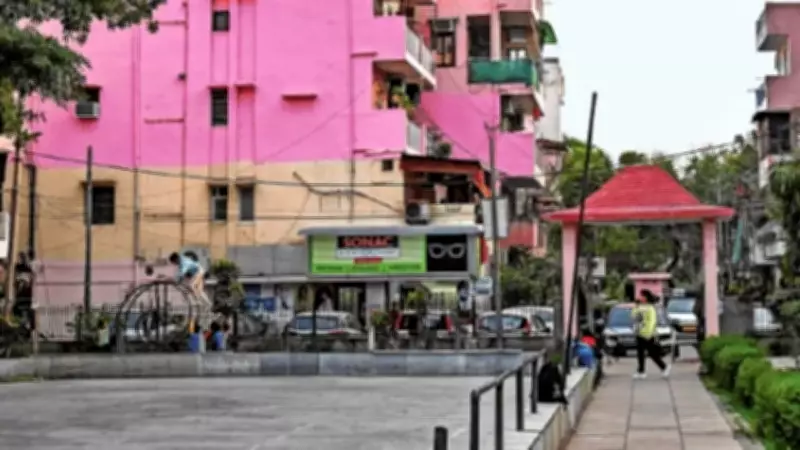
From Farmland to Flourishing Colony: The Remarkable Transformation of Delhi's Vikaspuri
While Delhi's vast expanse may sometimes feel impersonal, its residents frequently develop profound attachments to their local neighborhoods or mohallas. This exploration delves into the forces shaping pride, perceptions, and daily existence within these urban enclaves, focusing on one colony's extraordinary evolution.
An Underdog Colony That Forged Its Own Distinct Identity
In 1979, Budhela village adjacent to Tilak Nagar was designated for development, though the scale of its impending transformation remained unimaginable. Throughout the early 1980s, agricultural fields gradually yielded to DDA and cooperative housing apartments, marking the birth of what would become known as Vikaspuri.
Ajay Awasthi, then a Class XII student, emerged among the pioneering residents during this period. From his balcony vantage point, he witnessed the sequential emergence of roads, buildings, and civic amenities. Initial conditions were challenging: water supply proved erratic, power cuts occurred routinely, and procuring groceries necessitated journeys to Tilak Nagar. Evenings remained predominantly quiet, interrupted only by faint traffic sounds from afar.

Five Decades of Dramatic Change
Today, Vikaspuri presents a starkly different narrative. The neighborhood now buzzes with activity from shops, clinics, coaching centers, and markets. Utility services have stabilized significantly, and roads bustle with increased traffic. Residents consistently report steady, visible improvements across safety, infrastructure, connectivity, and collective identity.
Safety stands out as one of the most substantial enhancements. Ravi Mohan Kumar, aged 60, remembers moving in during 1984 when only one arterial road featured proper lighting. "Snatchings were common even a few years ago. Now, the situation has improved markedly," he observes.
Regarding social fabric, residents demonstrate near-unanimity. Many characterize Vikaspuri as a close-knit community where neighbors check on each other, exchange festive foods, and provide support during emergencies. Although frequently labeled Punjabi-dominated, locals emphasize that daily life reflects considerably greater diversity. Cooperative societies accommodate families from Himachal Pradesh, Uttarakhand, and various other regions, with community events consistently transcending background differences.
Green Spaces and Connectivity: Quiet Strengths
Green spaces have emerged as another subtle yet significant asset. Plantation initiatives and the conversion of barren patches into parks—integral to original planning—have established greenery as a defining positive feature. Most green coverage exists within residential pockets rather than along main thoroughfares. Cleanliness has generally improved, though consistency varies across areas.
On connectivity, perceptions remain predominantly favorable. Metro access, NCR road links, and readily available e-rickshaws have rendered daily commuting more manageable compared to numerous Outer Delhi colonies. Basic civic infrastructure—including water, electricity, sewerage, and schools—has similarly stabilized over time.
Persistent Challenges and Governance Complexities
Nevertheless, certain challenges endure. Healthcare represents a critical gap. "Even today, no major hospital operates here," notes resident Manish Dutt. Governance overlap constitutes another concern, with three MLAs representing territories within a 5-kilometer radius. Many residents believe this arrangement complicates coordination on local issues. Traffic congestion, street shrinkage due to encroachments, and delayed civic upgrades also feature prominently among resident complaints.
Some describe Vikaspuri as an "underdog," contending it has received stepmotherly treatment relative to neighboring Janakpuri. As evidence, residents highlight that while three Metro stations bear the Janakpuri name, none incorporate Vikaspuri—a missed opportunity, they argue, for visibility and identity reinforcement.

A Shared Journey of Growth and Identity Formation
Despite lingering concerns, most residents concur that quality of life has improved steadily. Shakti Sharma, who relocated here in 1984, reflects: "You could purchase larger plots in south Delhi, but here you obtained planning combined with affordability."
Vikaspuri's narrative, residents emphasize, extends beyond mere buildings and infrastructure. It encompasses people evolving alongside their environment—a shared journey that has fundamentally shaped the colony's distinctive identity, transforming farmland into a thriving urban community with its own unique character and resilience.