

West Bengal's 2026 Election: Identity Politics Takes Center Stage
The 2026 West Bengal Assembly election is shaping up to be a profound contest not merely over governance, welfare, or corruption, but over something far more visceral: identity. As the campaign intensifies, the familiar charge of "bohiragoto" (outsider) has resurfaced at the heart of political discourse, with the All India Trinamool Congress (TMC) reigniting a narrative that proved pivotal in blunting the Bharatiya Janata Party's (BJP) rise five years ago.
The Revival of the 'Outsider' Charge
The immediate catalyst for this resurgence, evident in reactions to Leander Paes joining the BJP, demonstrates how swiftly labels like "outsider," "parachuted," and "not one of us" are deployed in Bengal's political arena. However, if the TMC has doubled down on this strategy, the BJP in 2026 is crafting a nuanced counter-argument rather than merely denying the accusation.
The BJP has increasingly foregrounded the issue of illegal infiltration, alleging that the state government has been "lenient" toward undocumented migrants, with implications for Bengal's demographic and cultural fabric. From the BJP's perspective, this reframes the debate from whether it is an "outsider" political force to a broader question of who constitutes an "outsider" within Bengal itself.

Evolution of the Insider-Outsider Narrative
The TMC has rejected these claims as "politically motivated," asserting that the BJP is raising such concerns to counter perceptions of cultural disconnection from the state. This marks a significant evolution in Bengal's insider-outsider politics, often termed the "bhadralok vs bohiragoto" narrative. While this framing did not originate in 2026, the 2021 West Bengal Assembly elections saw its most effective deployment.
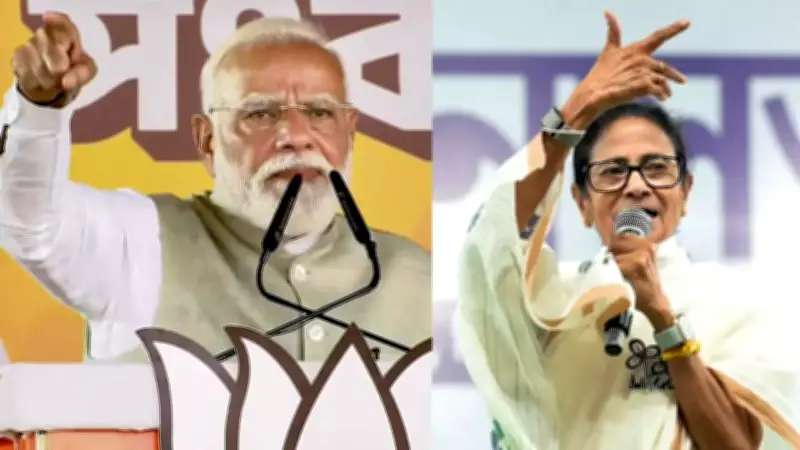
Faced with aggressive BJP expansion, Chief Minister Mamata Banerjee transformed what could have been a standard anti-incumbency battle into a referendum on identity. Her potent message, encapsulated in the slogan "Bangla Nijer Meyekei Chay" (Bengal wants its own daughter), reframed the contest as one of belonging versus intrusion. The BJP, led prominently by national figures like Narendra Modi and Amit Shah, was cast as an external force seeking to capture Bengal politically and culturally.
The 2021 results reinforced this strategy's effectiveness, with the TMC securing a commanding mandate. The outsider narrative was widely seen as consolidating support across regions and demographics. Yet, 2026 reveals a strategic shift in the BJP's response.
BJP's Strategic Pivot: From Defense to Offense
Instead of solely asserting local credentials, the BJP is reframing the identity debate around demographics and citizenship. It accuses the TMC of accommodating illegal immigrants, particularly from Bangladesh, arguing this alters the state's cultural and electoral character. In this narrative, the question shifts from whether the BJP is an outsider to whether Bengal itself is being transformed from within.
This politically charged argument positions the BJP not as an external force but as a "protector" of Bengali identity. The party claims unchecked infiltration dilutes local culture, strains resources, and reshapes voting patterns, alleging the TMC's tolerance is "driven by vote-bank politics." In a direct inversion, while Banerjee positions herself as defending Bengal against outsiders from Delhi, the BJP frames itself as defending Bengal against outsiders crossing the border.
Anchoring Legitimacy in Bengal's History
To counter the "outsider party" label, the BJP frequently invokes Syama Prasad Mukherjee, founder of the Bharatiya Jana Sangh and a prominent Bengali figure in the state's political history. This is not merely symbolic; it attempts to anchor the party's legitimacy within Bengal's own ideological lineage, arguing its roots are not entirely external despite its national character.

Simultaneously, the BJP has localized its campaign more carefully than in 2021, emphasizing Bengali leadership, cultural references, and region-specific messaging. This acknowledges that West Bengal's electoral contests are heavily influenced by perceptions of cultural familiarity and regional connection. However, a structural tension persists: the BJP's model relies on strong central leadership and national identity, while Bengal's political culture historically favors regional idioms and locally rooted leadership.
Food as a Cultural Flashpoint
Even food has become a flashpoint in the 2026 campaign. Chief Minister Mamata Banerjee has alleged the BJP could restrict fish, meat, and egg consumption, framing it as a threat to Bengali culture. The BJP has rejected this, with leaders including Prime Minister Narendra Modi countering claims and making visible efforts to align with local traditions.
In Pandaveswar, BJP candidate Jitendra Nath Tiwari filed nomination papers with a "fish procession," where supporters carried baskets while he held a large one. He stated, "If promoting West Bengal's culture is drama, I am proud of this drama." The TMC, meanwhile, continues to emphasize language, culture, and lifestyle as identity markers, questioning whether the BJP's approach aligns with Bengal's social context.
A Layered Identity Debate
What makes the 2026 contest notable is the simultaneous operation of both narratives. The TMC portrays the BJP as an external force, while the BJP raises concerns about illegal infiltration and its impact, framing it as an identity issue. The TMC rejects these claims as politically motivated, resulting in a layered debate where "outsider" is defined in competing ways.
For voters, the choice extends beyond parties to competing interpretations of belonging and representation. This dynamic, while not unique to West Bengal, is particularly intense here. Similar identity politics are seen in Maharashtra with Shiv Sena's focus on local interests, Tamil Nadu with Dravida Munnetra Kazhagam's emphasis on regional identity, and Assam where migration debates shape discourse.
Narrative vs. Strategy in Bengal's Politics
West Bengal stands out for how cultural identity and electoral strategy intertwine, extending beyond economics or migration to include language, literature, food, and cultural self-definition. The Leander Paes episode highlights the fluidity of "insider" definitions, where political alignment can shape perceptions of belonging as much as background.
The BJP's emphasis on infiltration adds a demographic dimension to the insider-outsider framing, broadening the conversation to governance issues, even as claims remain contested. As voters head to the polls, this layered contest will influence perceptions alongside traditional issues like employment, development, and law and order. Both parties combine identity-based messaging with policy promises.
Over the past decade, belonging has remained central to West Bengal's political discourse. In 2026, that contest continues, shaped by evolving narratives and strategies, ensuring identity remains a defining factor in the state's electoral landscape.





