The Collapse of Childhood in War
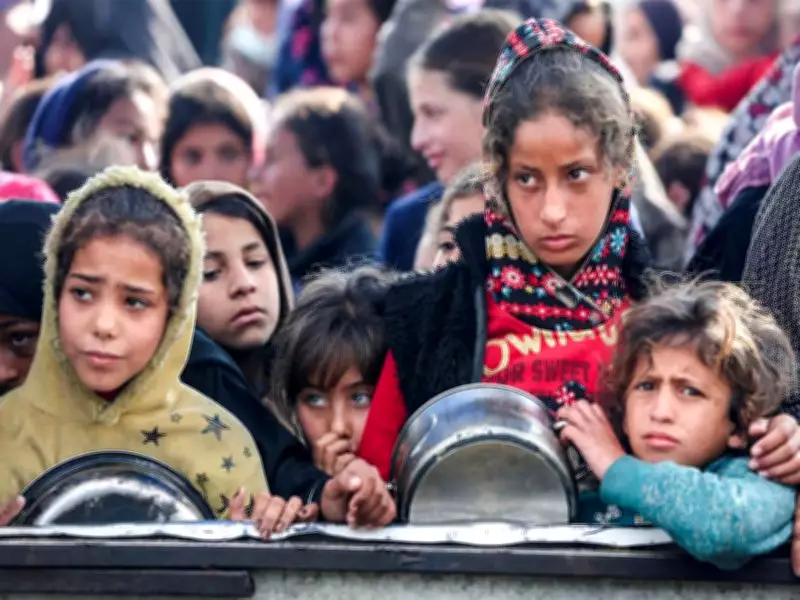
The film 'The Voice of Hind Rajab' centers on a harrowing telephone conversation between Red Crescent volunteers and Hanood, a young girl trapped in a car surrounded by her dead relatives. She pleads for rescue, and when the volunteer tries to soften the reality by saying others are sleeping, Hanood responds bluntly: "They are dead, all of them are dead." This moment, drawn from real audio, exposes the brutal truth that children in conflict zones do not perceive violence through a political lens. Hanood does not ask who is killing or why; she only asks for someone to save her.
The film illustrates that the greatest violence is not just the bullets but the destruction of trust in adults who are supposed to protect children. The volunteer can offer comfort but not rescue, and Hanood's family cannot protect her. This represents a profound failure of adulthood and the moral order, as the structures meant to preserve childhood are rendered powerless.
Children as Victims and Future Perpetuators of Violence
The film narrows the focus from thousands of victims to a single frightened child, insisting that before there is a statistic, there is a child. Hanood's mother later speaks of her ordeal while holding her young son, prompting the question: what will that boy become? This echoes the argument of Italian educator Maria Montessori and the 14th Dalai Lama that the seeds of war are sown in childhood. Children who witness and experience violence often reproduce it when they grow up, perpetuating the cycle of war.

Children in India: Spectators with Faulty Understanding
A study conducted with school children in Delhi investigated how they construct meaning around conflict, using the Palestine-Israel case. The researchers interviewed students in Grades V and IX from various schools. They found that about 80% of children had heard of Palestine, Gaza, war, and dispute. However, Grade IX students described Palestine and Gaza as religious communities within Israel. Some wrote that "Palestine was a community residing in a place called 'Hummus'" and "Gaza and Palestine are two poor minority communities in Israel." They had heard about the killing of hundreds of people, including children, but their understanding was deeply flawed.
The sources of information were television (50%), newspapers (30%), social media (30%), family (30%), and friends (20%). Notably, no teacher was mentioned as a source. The children felt sad and pitiful for Gaza's children and wanted the war to stop, but with a faulty understanding that they were a protesting minority within Israel.
Structural Violence and the Absence of Peace
The study reveals that the absence of direct violence does not mean peace. Structural violence persists in the form of the idea of violence. While children in Gaza face direct violence, children in India experience structural violence through a lack of accurate knowledge and understanding. The study shows that children are not mute spectators but lack the real ideas for imagining a better world, partly because teachers have not considered this valid knowledge for the classroom.
The Dalai Lama's Call for Compassionate Education
The Dalai Lama, who turns 91 this month, invests his hope in teachers. He argues that if teachers take up teaching merely as a way of making a living, without human love, affection, or a sense of responsibility, then education fails. He emphasizes that altruism and kindness indicate a mind intent on benefiting others. If each person possesses the intention to serve others, society will be much happier. Teachers should focus on creating individuals who are altruistic, kind, and compassionate, understanding the nature of life to make the world peaceful for everyone.
The article concludes that teachers must integrate human values of compassion, tolerance, and mutual understanding into their teaching. Children in India need to understand the struggles of their counterparts in Gaza as valid and essential knowledge. This would be a befitting tribute to the teachings of the Dalai Lama and the spirit of Hanood.