

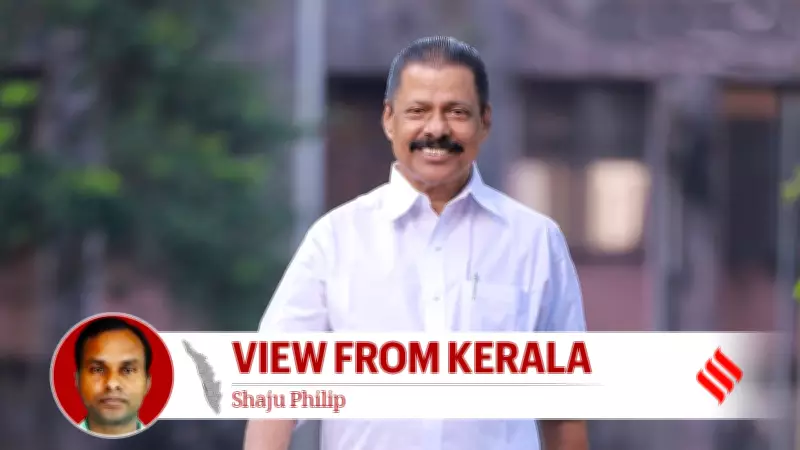
Kerala's Political Paradox: CPI(M) and BJP Echo Each Other on Minority Politics
As Kerala prepares for the upcoming Assembly elections, a surprising alignment has emerged between the Communist Party of India (Marxist) and the Bharatiya Janata Party regarding their stance on minority communities, particularly Muslims. Both parties are voicing similar concerns about the influence of the Indian Union Muslim League within the Congress-led United Democratic Front, creating a unique political narrative in the state.
Shared Rhetoric on IUML and Communal Fears
At the heart of this convergence is the accusation from CPI(M) and BJP leaders that the IUML serves as a political front for right-wing Muslim organizations, such as the Jamaat-e-Islami and the Social Democratic Party of India. CPI(M) leaders, including former state minister A K Balan, have warned that a UDF victory could lead to the Jamaat controlling the Home Department, recalling the communal riots that marked the UDF's tenure from 2001 to 2006. Similarly, the BJP has accused the Congress of mainstreaming groups it claims advocate for an Islamic nation, amplifying fears of communal polarization.
This shared messaging gained traction when Vellappally Natesan, a prominent Ezhava community leader known for anti-Muslim remarks, expanded his call for Hindu unity to include Christians, lending legitimacy to the narrative. Natesan's pro-CPI(M) leanings and his son's leadership in the BJP-allied Bharath Dharma Jana Sena further blur the lines between the two parties' positions.

Historical Context and Electoral Implications
The CPI(M), which previously sought to consolidate Muslim votes by positioning itself as a bulwark against the BJP, now faces accusations of Islamophobia as it tries to retain its traditional Hindu base. This shift comes after Muslims did not back the party en masse in the 2024 Lok Sabha polls. Both parties invoke the 2011-16 UDF government, alleging that the IUML wielded disproportionate power, securing key portfolios and unilaterally declaring ministers without consulting allies.
The IUML has reinforced these fears by asserting its right to claim the Deputy Chief Minister's post if the UDF returns to power, creating perceptions that it dominates the alliance. The decline of the Kerala Congress, a regional Christian party, has further strengthened this optics. In the 2021 Assembly elections, the UDF's defeat was partly attributed to the perception of IUML control, with the party consolidating in Muslim-dominated Malappuram but losing ground elsewhere.
Voter Dynamics and Future Outlook
Muslim voting patterns in Kerala have shown a split: in Lok Sabha elections since 2014, they have largely backed parties opposing the Sangh Parivar, but in Assembly polls, their choices have varied. With the CPI(M) now echoing BJP rhetoric, the community's voting behavior in the upcoming elections will be crucial, potentially reshaping Kerala's political landscape. This unusual alignment highlights the complex interplay of caste, religion, and power in the state's high-stakes electoral battles.






