

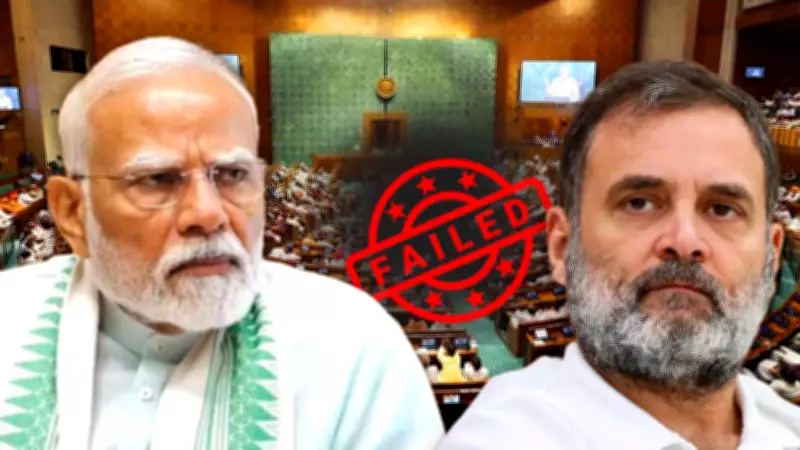
Women's Reservation Bill Fails to Pass in Lok Sabha, Missing Two-Thirds Majority
The Lok Sabha has dealt a significant blow to the Modi government's legislative agenda by rejecting a crucial bill aimed at advancing women's political representation. The proposed legislation, which sought to fast-track women's reservation and delimitation processes without conducting a fresh Census, failed to secure the necessary two-thirds majority during a critical parliamentary vote.
Vote Breakdown Reveals Legislative Defeat
In a dramatic session that saw intense debate and political maneuvering, 528 members of the Lok Sabha participated in the decisive vote. The final tally revealed 298 members supporting the bill, while 230 opposed it. This outcome fell substantially short of the constitutional requirement of a two-thirds majority, effectively killing the legislation in the lower house of Parliament.
The bill's defeat represents a major setback for the government's efforts to implement women's reservation in legislative bodies through an expedited process. The proposed mechanism would have bypassed the traditional requirement of a new Census before implementing delimitation changes, a controversial aspect that drew criticism from opposition parties.

Government Response and Legislative Fallout
Following the bill's rejection, Union Minister Kiren Rijiju made a significant request in the House. He asked that two related bills, including the Delimitation Bill 2026, not be taken up for consideration in light of the women's reservation bill's failure. This move suggests the government is reassessing its legislative strategy on these interconnected issues.
The defeat highlights the challenges of building consensus on constitutional amendments and significant electoral reforms in India's diverse political landscape. The women's reservation issue has been debated for decades, with various attempts to implement it facing parliamentary hurdles.
Broader Implications for Electoral Reform
This legislative failure raises important questions about the future of women's political representation in India. The proposed bill was seen as a potential breakthrough in a long-standing debate about gender equity in electoral politics. Its rejection means the status quo remains, with women continuing to be significantly underrepresented in legislative bodies across the country.
The delimitation aspect of the failed legislation adds another layer of complexity. Delimitation, which involves redrawing electoral constituencies based on population changes, is a politically sensitive process that affects representation across states and regions. The government's attempt to link it with women's reservation created a legislative package that ultimately proved too contentious to pass.
Political analysts suggest this defeat may force the government to reconsider its approach to both women's reservation and delimitation reforms. The need for broader consensus-building and potentially separating these issues in future legislative attempts has become apparent following this parliamentary setback.






