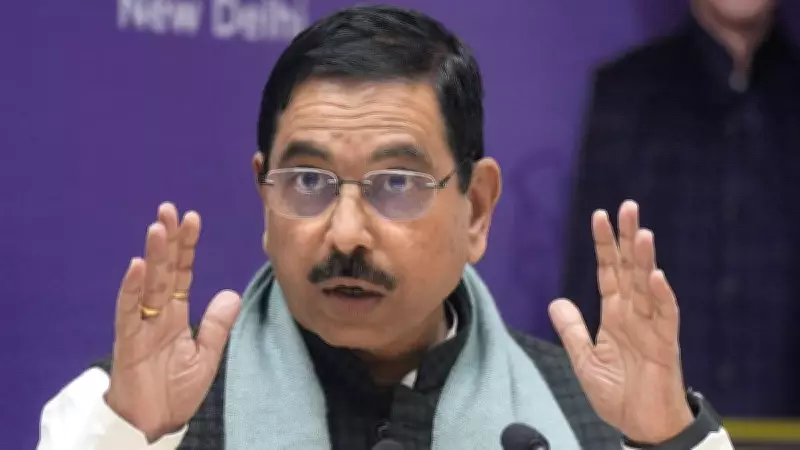
Union Minister Pralhad Joshi has announced that the Women's Reservation Bill, which seeks to reserve 33% of seats in the Lok Sabha and state legislative assemblies for women, will be tabled again in Parliament. The bill, officially known as the Constitution (108th Amendment) Bill, 2008, was passed by the Rajya Sabha in 2010 but lapsed with the dissolution of the 15th Lok Sabha.
Background of the Bill
The Women's Reservation Bill has a long history in Indian politics. It was first introduced in 1996 by the United Front government but failed to pass due to lack of consensus. Subsequent attempts in 1998 and 1999 also did not succeed. The bill finally cleared the Rajya Sabha in 2010 but could not be taken up in the Lok Sabha. Since then, various political parties have expressed support for the measure, but it has remained pending.
Key Provisions
- Reservation of one-third of all seats in the Lok Sabha and state legislative assemblies for women.
- Rotation of reserved constituencies within a state or union territory.
- Provision for reservation of seats for Scheduled Castes and Scheduled Tribes within the quota.
Current Status
Pralhad Joshi, the Union Parliamentary Affairs Minister, stated that the government is committed to empowering women and will ensure the bill is passed. He emphasized that the bill is a priority and will be introduced in the upcoming session. The move has been welcomed by women's rights groups and political parties, though some have called for sub-quotas for Other Backward Classes (OBCs) and minority women.

Political Reactions
Several political parties have responded positively to the announcement. The Congress party, which had previously supported the bill, reiterated its backing but demanded immediate passage. Regional parties like the Samajwadi Party and Rashtriya Janata Dal have expressed conditional support, seeking inclusion of OBC women. The Bharatiya Janata Party (BJP) has assured that all concerns will be addressed through consultations.
The bill's reintroduction is seen as a significant step towards gender parity in Indian politics. Currently, women hold only about 14% of seats in the Lok Sabha and around 10% in state assemblies. The reservation is expected to increase women's representation substantially, though critics argue that rotation may reduce accountability.
As the government prepares to table the bill, all eyes are on the Parliament for what could be a landmark legislation for women's empowerment in India.