

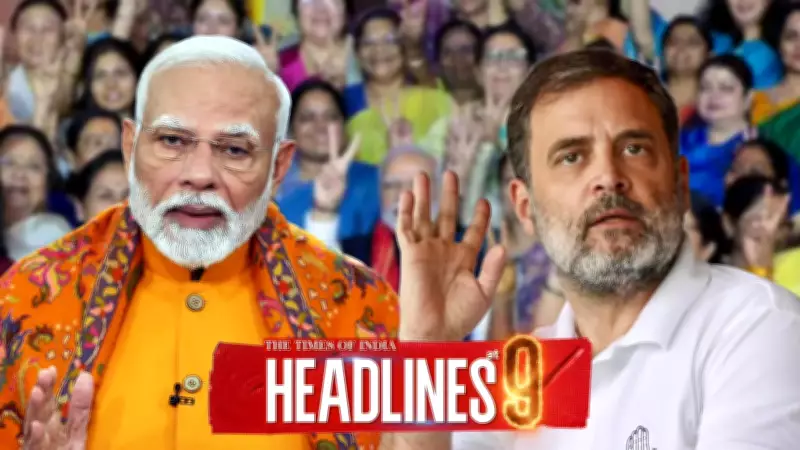
Women's Reservation Bill Fails to Pass Lok Sabha Hurdle, Triggering Widespread Protests
The much-anticipated constitutional amendment bill aimed at reserving seats for women in Parliament has been decisively defeated in the Lok Sabha. The legislation failed to secure the mandatory two-thirds majority required for passage, representing a significant political setback for the Modi government and igniting immediate protests with chants of "women won't forgive."
A Contentious Debate Precedes the Vote
Prior to the crucial vote, the parliamentary session witnessed heated exchanges during the debate on three interconnected bills concerning women's reservation and delimitation. Union Home Minister Amit Shah launched a vigorous offensive against opposition parties, accusing them of employing "ifs and buts" to obstruct the legislation.
Shah presented a detailed argument, claiming that opposition to the delimitation component was, in essence, opposition to increasing the representation of Scheduled Castes (SC) and Scheduled Tribes (ST) in Parliament. He countered narratives suggesting the bills would disadvantage southern states by presenting data indicating that proportional representation would remain largely stable post-delimitation.

Accusations of "Fake Concern" and Political Fallout
The Union Minister escalated his critique by accusing the opposition of demonstrating "fake concern" for backward classes, framing their resistance as politically motivated rather than principled. This accusation further polarized the already tense atmosphere in the house.
The bill's failure has not only stalled a key legislative promise but has also sparked immediate public outcry. Protesters gathered outside Parliament, voicing their anger and disappointment, highlighting the deep societal expectations that had been attached to this constitutional amendment.
This development marks a pivotal moment in India's legislative history, raising questions about the future of gender representation in the highest echelons of power. The political ramifications are expected to be substantial, with the issue likely to dominate public discourse and electoral strategies in the coming months.






