Punjab Youth Congress President Urges Chancellor to Protect RGNUL's Name
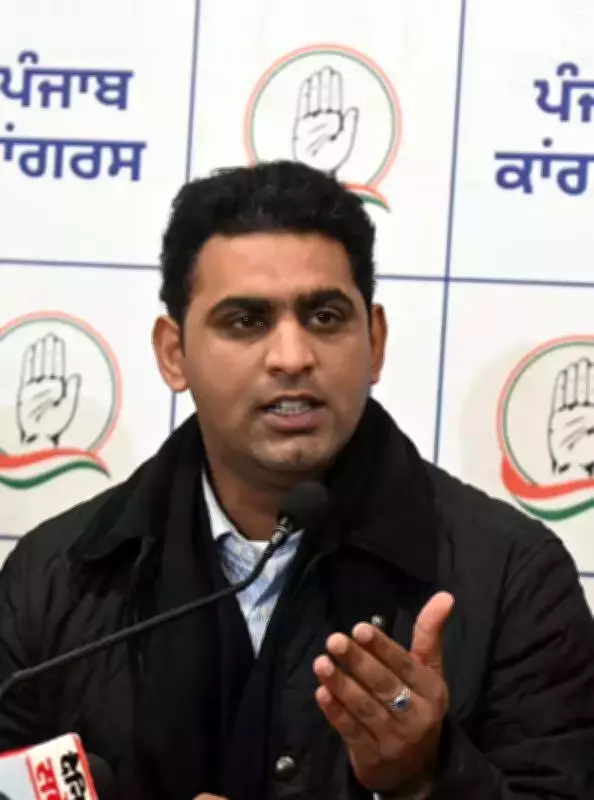
In a significant development concerning higher education in Punjab, Mohit Mohindra, the president of the Punjab Youth Congress, has formally written an open letter to the Chief Justice of the Punjab & Haryana High Court. The Chief Justice also serves as the chancellor of Rajiv Gandhi National University of Law (RGNUL) in Patiala. Mohindra's letter strongly urges the chancellor not to entertain a recent recommendation to change the university's established name.
Opposition to Academic Council's Recommendation
Mohindra's opposition targets a proposal from the university's Academic Council, which recommended renaming RGNUL as simply 'National Law University,' thereby removing the reference to former Prime Minister Rajiv Gandhi. In his detailed letter, Mohindra argued that such a move would establish a wrong and dangerous precedent. He emphasized that the proposal appears to be politically motivated rather than administrative in nature.
The Youth Congress leader highlighted that RGNUL was established through a specific Act passed by the Punjab Vidhan Sabha in 2006, with its name clearly defined under that statute. "Are we questioning the collective wisdom of the lawmakers who drafted and passed the Act back then?" Mohindra questioned in his letter. He further asked, "More importantly, why are we doing it? What is the main objective behind this move?"

Mohindra pointedly noted the timing of this proposal, stating, "At a time when society faces serious economic and governance challenges, how can renaming an established university be a priority?"
Focus on Academic Priorities Over Renaming
In his communication to the chancellor, Mohindra suggested that the Academic and Executive Councils should redirect their efforts toward more pressing academic matters. He specifically mentioned:
- The pending NAAC accreditation for the university since 2020
- Improving the institution's NIRF rankings
Mohindra described these as mandatory functions that should take precedence over renaming exercises, which he argued fall outside the councils' proper ambit.
The Youth Congress president reminded the chancellor that RGNUL has functioned successfully for nearly two decades with bipartisan support, earning both national and international recognition under its current brand identity. "What about the university's logo that is patented, degrees, alumni network, and about 3,000 graduates since its inception who carry the institution's established identity?" he asked. "What happens to that legacy?"
Defending Rajiv Gandhi's Legacy
Mohindra dedicated a substantial portion of his letter to defending the legacy of former Prime Minister Rajiv Gandhi, whose name the university currently bears. He noted Gandhi's contributions to India's development, particularly:
- Ushering in a telecom revolution that transformed communication infrastructure
- Empowering youth by lowering the voting age from 21 to 18 years
"Erasing his name from an institution of higher learning reflects disregard for a visionary leader who transformed India," Mohindra stated. He expressed concern about the broader implications of such a name change: "What message are we sending? That institutional identity can change with shifting political winds? That our history and legacy hold no significance?"
Call to Protect Institutional Stability
In his concluding appeal, Mohindra urged the chancellor to reject the recommendation outright. He called for protection of what he described as the institutional stability, legal sanctity, and historical legacy of Rajiv Gandhi National University of Law. The Youth Congress leader framed the issue as one that transcends immediate political considerations, touching on fundamental questions about institutional continuity and respect for legislative processes.

The open letter represents a formal political intervention in an academic governance matter, highlighting tensions between administrative decisions and historical preservation in India's educational landscape. As chancellor of RGNUL, the Chief Justice of the Punjab & Haryana High Court now faces a decision that balances academic recommendations against concerns about political motivation and institutional legacy.