

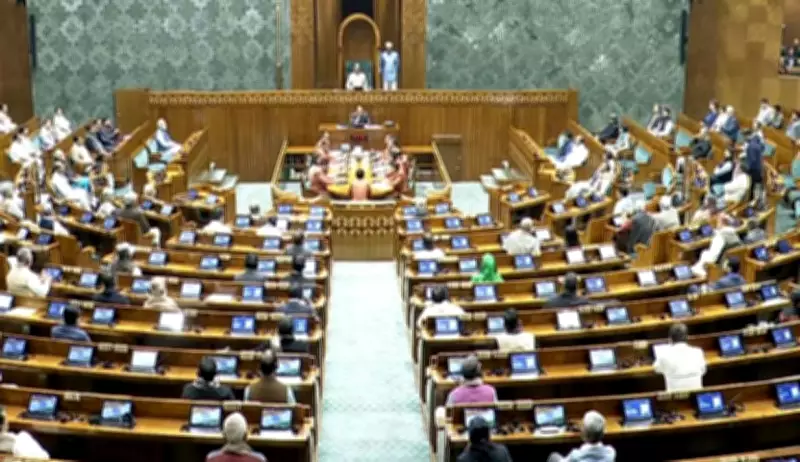
Budget Session 2026 Commences with Heated Debates in Parliament
The Budget Session of the Indian Parliament for the year 2026 has officially begun, marking a crucial period for legislative discussions and policy formulations. This session is set to address a wide array of national issues, with the initial focus on the Motion of Thanks on the President's Address, which outlines the government's vision and priorities for the upcoming fiscal year.
Motion of Thanks: A Key Parliamentary Tradition
The Motion of Thanks on the President's Address is a significant parliamentary procedure that follows the ceremonial address by the President at the start of the session. This motion allows members of both the Lok Sabha and the Rajya Sabha to debate and express their views on the government's agenda as presented in the address. It serves as a platform for constructive criticism and support, reflecting the democratic ethos of the Indian Parliament.
During the ongoing discussions, lawmakers from various political parties are engaging in detailed deliberations. The debates are expected to cover topics such as economic policies, social welfare schemes, and national security, as highlighted in the President's speech. This process is essential for ensuring accountability and transparency in governance.

High-Profile Speeches by Political Leaders
Prime Minister Narendra Modi delivered a comprehensive speech, emphasizing the government's achievements and future plans. He highlighted initiatives aimed at boosting economic growth, enhancing infrastructure, and promoting digital innovation. PM Modi's address was met with applause from ruling party members, who praised the government's efforts in driving national development.
In response, Congress leader Rahul Gandhi presented a critical perspective, questioning the implementation of various schemes and raising concerns about issues like unemployment and inflation. His speech sparked lively exchanges between opposition and treasury benches, underscoring the vibrant nature of parliamentary democracy in India.
Budget Discussions and Legislative Agenda
Following the Motion of Thanks, the Parliament will shift its focus to the Union Budget for 2026-27. Key areas of discussion are anticipated to include:
- Fiscal policies and taxation reforms
- Allocations for healthcare and education sectors
- Infrastructure development projects
- Measures to address climate change and sustainability
The Budget Session is a critical time for passing important bills and approving financial allocations. Lawmakers are expected to engage in thorough scrutiny of the budget proposals to ensure they align with the nation's needs and aspirations.
Implications for Governance and Public Policy
The outcomes of these parliamentary debates will have far-reaching implications for India's governance and public policy landscape. The discussions on the Motion of Thanks and the subsequent budget deliberations will shape the legislative agenda for the year, influencing decisions on resource allocation and policy implementation.
As the session progresses, citizens and stakeholders are closely monitoring the proceedings, hoping for constructive outcomes that address pressing national challenges. The Parliament's role in fostering dialogue and consensus is pivotal in a diverse democracy like India.
This session underscores the importance of parliamentary democracy in India, where robust debates and discussions pave the way for informed decision-making and progressive governance.






