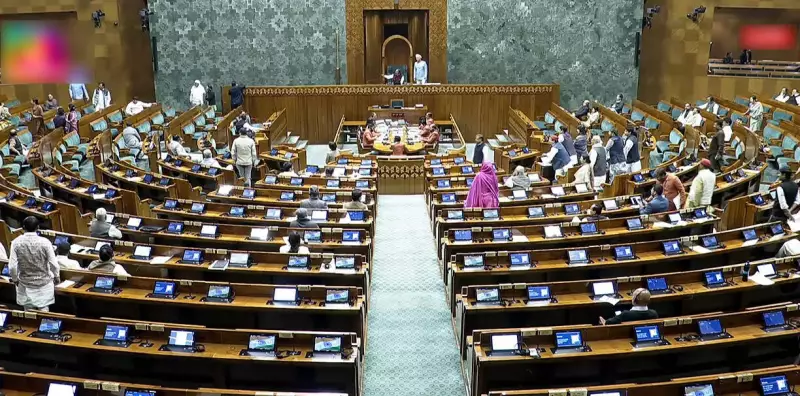
A heated confrontation erupted between members of the ruling Bharatiya Janata Party (BJP) and the opposition Dravida Munnetra Kazhagam (DMK) in the Lok Sabha on Friday. The clash centered on the contentious issue of lighting a lamp at a 'Deepathoon' event held at a hilltop temple located close to a dargah near Madurai, Tamil Nadu.
Chaos and Adjournment in Parliament
The day's proceedings began dramatically with DMK members storming the Well of the House. They were determined to raise the Madurai temple issue, which led to significant uproar. This forced the adjournment of the crucial Question Hour for nearly 30 minutes, disrupting parliamentary business.
Accusations and Counter-Charges
When the House reconvened, DMK MP T R Baalu raised the matter during Zero Hour. He launched a sharp attack on the BJP, accusing the party of attempting to "ignite" communal tensions in Tamil Nadu through the lamp-lighting event. Baalu went a step further by claiming that the High Court judge, who had permitted the lighting of the lamp, owed allegiance to a "particular ideology."

This remark about the judiciary drew an immediate and stern rebuke from Union Minister for Parliamentary Affairs, Kiren Rijiju. He strongly criticized the DMK leader for casting aspersions on a member of the judiciary and urged the Chair to delete the remarks from the record.
BJP's Defense of Worship Rights
Responding to the DMK's allegations, Union Minister of State L Murugan hit back at the Tamil Nadu state government. He defended the action and accused the state administration of denying devotees their fundamental "right to worship" at the Arulmigu Subramaniya Swamy Temple. The BJP's stance framed the issue as one of religious freedom versus state overreach.
The exchange highlighted the deep political and ideological divide between the national ruling party and the key regional opposition from the south. The incident in Parliament reflects the ongoing sensitivities around religious sites and practices in various parts of the country, with political parties often leveraging them for electoral narratives.