

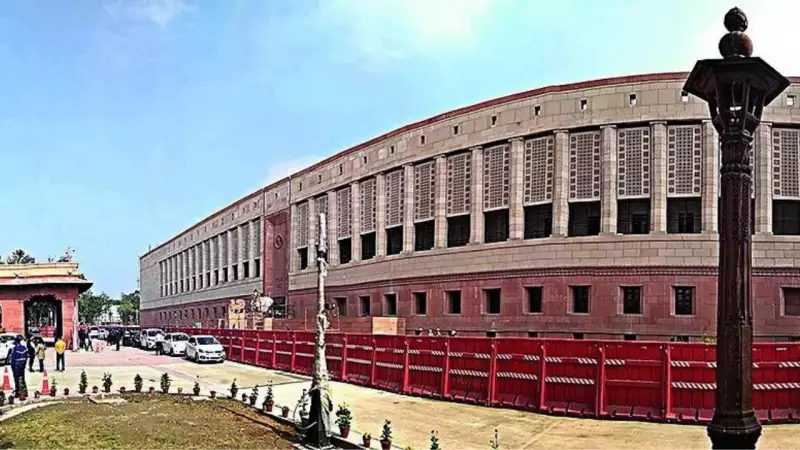
Prime Minister Narendra Modi is set to initiate a significant parliamentary discussion in the Lok Sabha on Monday, marking the 150th anniversary of the national song, Vande Mataram. This debate is poised to become a major flashpoint in the ongoing ideological battle between the ruling Bharatiya Janata Party (BJP) and opposition parties, primarily the Congress, over the song's historical journey and cultural significance.
Key Speakers and Schedule for the Parliamentary Debate
The debate has been allocated a substantial ten hours in the Lok Sabha, with a similar duration scheduled for the Rajya Sabha on Tuesday. From the BJP's side, prominent voices will include Defence Minister Rajnath Singh and Home Minister Amit Shah, who will be the main speaker in the Upper House. The Congress will be represented by Priyanka Gandhi Vadra and Gaurav Gogoi.
BJP sources indicate the party plans to unveil many important and lesser-known facets related to Vande Mataram during the discussion. This move is seen as a determined bid to corner the Congress party over its historical stance on the patriotic composition, which served as a rallying cry during the freedom struggle.

The Historical Controversy and Political Accusations
The debate follows recent remarks by PM Modi, who accused the Congress of dropping several stanzas of the song in 1937. The song was originally penned by noted Bengali writer Bankim Chandra Chatterjee. Modi asserted that this action sowed the seeds of Partition and that such a divisive mindset remains a challenge for the nation.
On Sunday, BJP spokesperson Sambit Patra claimed that the debate would expose the reality of former Prime Minister Jawaharlal Nehru's position. He cited historical texts, noting Nehru had contended that Vande Mataram's association with Chatterjee's novel Anandmath could irritate Muslims and that he found the language of the later stanzas difficult to understand.
The Congress, defending its historical decision, has cited Nobel laureate Rabindranath Tagore's support for pruning the composition to its first two stanzas. The party argues that Nehru accepted this recommendation due to both the complexity of the subsequent verses and objections from some sections of the Muslim community, led by the Muslim League, who opposed the song's evocative Hindu cultural themes.
Broader Political Implications and Bengal Focus
The debate extends beyond immediate history, with significant implications for upcoming state politics. Chatterjee's Bengali roots and the song's strong endorsement by Netaji Subhas Chandra Bose are expected to be leveraged by the BJP to put the Trinamool Congress (TMC) on the defensive regarding Bengali identity. This is a strategic move as the party prepares for the assembly polls in West Bengal slated for next year.
Opposition parties, including Congress, TMC, and the Samajwadi Party, are likely to counter by highlighting the alleged indifference of the BJP's ideological mentor, the Rashtriya Swayamsevak Sangh (RSS), to the freedom struggle. They may also target the historical stand of Hindutva figures on certain symbols of Indian nationalism.
Following the heated discussion on Vande Mataram, both Houses of Parliament will take up a debate on election reforms, which is expected to morph into another war of words between the government and the opposition over the preparation of electoral rolls.






