

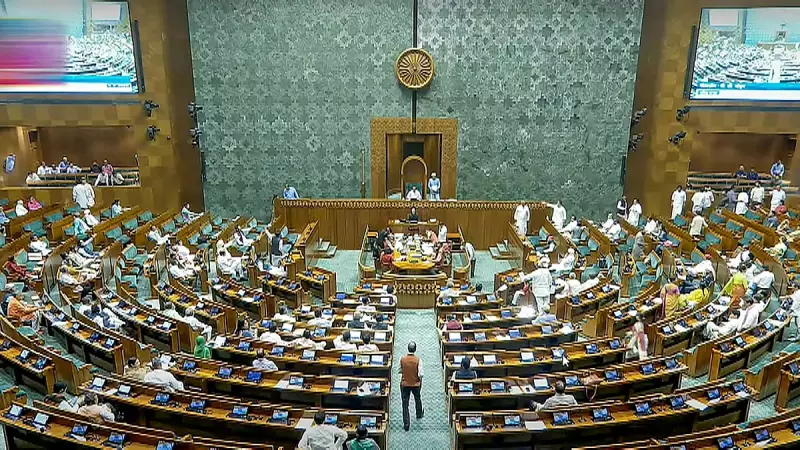
In a compelling call for legislative reform, governance experts have underscored the urgent need for India's Parliament to transition towards a model of governing by established rule, rather than through arbitrary or reactive law-making. This vision positions Parliament not merely as a law-passing body, but as the central forum for national deliberation.
The Ideal Role of Parliament: A Forum for Foresight
The core argument presented is that the Parliament of India should fundamentally serve as a proactive platform. Its ideal function is to scrutinise emerging issues on the horizon, meticulously evaluate potential pathways forward, and host rigorous debates that incorporate diverse stakeholder perspectives. This process of deep deliberation is seen as essential for selecting the optimal path for society's progress, moving beyond partisan politics to genuine problem-solving.
Moving Beyond Ad-hoc Lawmaking
The phrase "governing by rule, not by law" suggests a critique of a system where laws might be created or amended in an ad-hoc, sometimes opaque manner, without the foundational bedrock of consistent principles and thorough scrutiny. The advocated model emphasizes predictability, transparency, and the primacy of due process. It implies that governance should be guided by a stable framework of rules and constitutional norms that ensure fairness and long-term planning, rather than being swayed by short-term political expediencies.

The Path Forward: Deliberation Over Decree
For this new normal to take root, parliamentary proceedings must prioritize meaningful deliberation. This involves giving adequate time for discussion on critical national issues, actively seeking input from a wide array of stakeholders including civil society, industry experts, and the public, and fostering an environment where consensus can be built. The ultimate goal is to ensure that every piece of legislation is the product of informed debate and represents the best possible choice for the nation's future, as highlighted in the opinion piece authored by K Makkar, S Mukhopadhyay, and K D S Chauhan.
The commentary, last updated on 05 January 2026, at 20:57 IST, serves as a timely reminder of the foundational principles of democratic governance. As India continues to evolve on the global stage, the strength and functionality of its parliamentary democracy will remain pivotal. Embracing a culture of rule-based governance and deep parliamentary deliberation could define the next chapter in the nation's democratic journey.






