Opposition Hardens Stance on Electoral Roll Revision
The winter session of Parliament, already shortened, faces the serious threat of disruption as a united opposition bloc forcefully demanded a discussion on the Special Intensive Revision (SIR) of electoral rolls on Sunday. With the government refusing to commit to their demand, a repeat of the previous session's complete washout appears likely.
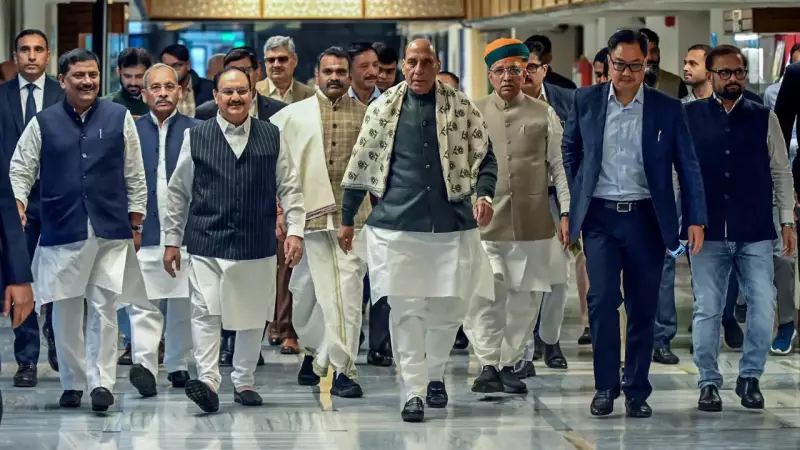
The confrontation was set in motion at an all-party meeting chaired by Defence Minister Rajnath Singh. While opposition parties from the Congress also raised concerns about national security following a blast in Delhi and the critical issue of rising air pollution, the Special Intensive Revision became their central rallying point.
"Will Not Allow Parliament to Function"
Samajwadi Party leader Ram Gopal Yadav, who leads the second-largest opposition contingent in the Lok Sabha with 37 members, issued a stark warning on the eve of the 19-day session, which begins Monday with 15 scheduled sittings. "We will not allow Parliament to function if a discussion is not held on SIR," he declared.

Yadav alleged that the electoral roll review is riddled with irregularities, claiming it has led to immense stress and even suicides among some booth-level officers. He further asserted that many SP lawmakers, including himself, have been placed in a "C category", which requires more documentation, as part of a targeted effort to delete specific voter segments from the rolls.
Government's Non-Committal Stand and Historical Precedent
In response, Parliamentary Affairs Minister Kiren Rijiju informed the opposition that he would consult with key government functionaries and revert on their demand, offering no concrete assurance. This mirrors the government's stance from the last session, where Rijiju cited a 1988 ruling by the then Lok Sabha Speaker Balram Jakhar—from when the Congress was in power—stating that the House cannot debate the decisions and functioning of the Election Commission.
This precedent was used to reject the opposition's demand for a SIR discussion previously, leading to protests that washed out proceedings in both the Lok Sabha and Rajya Sabha, barring a discussion on Operation Sindoor.
JDU Downplays Concerns, Government Pushes Its Agenda
Attempting to dilute the opposition's argument, BJP ally and JDU working president Sanjay Jha highlighted that the SIR exercise in Bihar, the first state where it was implemented, saw no official complaints from voters or political parties, suggesting the opposition's strident stand lacks public support.
The government, meanwhile, presented a tentative agenda of 14 items, including 13 bills, to the 50 representatives from 36 parties at the meeting. Rijiju also conveyed the government's keenness for a discussion on Vande Mataram, commemorating the national song's 150th anniversary, which was recently celebrated with fervour by the BJP-led NDA.
Deadlock Persists as Congress Takes Firm Line
Following the all-party meet, the Congress held its own strategy session, with sources indicating the party is firming up its position that the demand for a SIR debate is non-negotiable. The deadlock continued into the business advisory meetings for both Houses, where the government and opposition work out the parliamentary agenda.
In a potential compromise, some opposition members, including CPM's John Brittas, suggested a short-duration discussion on broader electoral reforms. This could circumvent the government's refusal to discuss the SIR directly by framing the issue within the context of the ongoing electoral exercise in 12 states and Union Territories.