

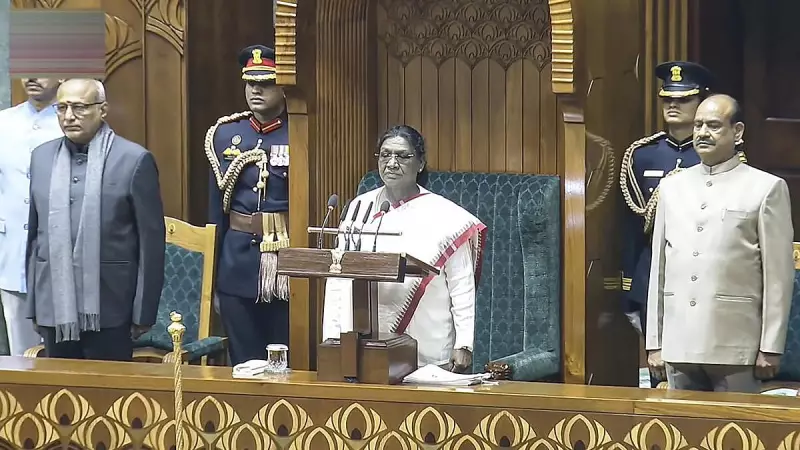
Opposition Parties Stage Protests in Parliament Over President Murmu's Address
In a significant development in the Indian Parliament, opposition parties have staged strong protests during the address by President Droupadi Murmu. The protests erupted as the President mentioned key government initiatives, including the Vande Bharat trains and the Ram G Act, leading to heated exchanges and disruptions in the parliamentary proceedings.
President Murmu's Address Sparks Political Tensions
President Droupadi Murmu, in her address to the joint session of Parliament, highlighted various achievements and ongoing projects of the government. Among these, she specifically mentioned the Vande Bharat trains, which are high-speed rail services aimed at modernizing India's transportation infrastructure, and the Ram G Act, a legislative measure that has been a point of contention in political circles. The mention of these initiatives was met with immediate resistance from opposition members, who raised slogans and voiced their dissent, arguing that the address overlooked pressing issues such as unemployment, inflation, and social welfare concerns.
Details of the Parliamentary Protests
The protests in Parliament were led by members from various opposition parties, who gathered in the well of the House to express their disapproval. According to reports, the disruptions caused temporary halts in the proceedings, with Speaker and other presiding officers attempting to restore order. The opposition's grievances centered on what they perceive as a biased focus on certain projects while ignoring broader national challenges. In response, ruling party members defended the President's address, stating that it accurately reflected the government's commitment to development and national pride through initiatives like Vande Bharat and the Ram G Act.

Political Implications and Reactions
This incident has intensified the ongoing political rivalry in India, with analysts noting that such protests are indicative of deeper ideological divides. The opposition's protest highlights their strategy to challenge the government's narrative and draw attention to alternative priorities. Meanwhile, the government has reiterated its stance, emphasizing the importance of these projects in fostering economic growth and cultural heritage. The event is expected to influence upcoming parliamentary debates and could impact legislative processes, as both sides dig in their heels over governance and policy directions.
Broader Context and Future Outlook
The protests in Parliament over President Murmu's address are part of a larger pattern of political confrontations in India's democratic landscape. As the nation grapples with multiple challenges, from economic reforms to social issues, such episodes underscore the vibrant yet contentious nature of Indian politics. Moving forward, observers anticipate continued debates and possibly more protests as parties position themselves ahead of future elections. The focus on initiatives like Vande Bharat and the Ram G Act is likely to remain a flashpoint, reflecting broader discussions about development, identity, and governance in contemporary India.






