

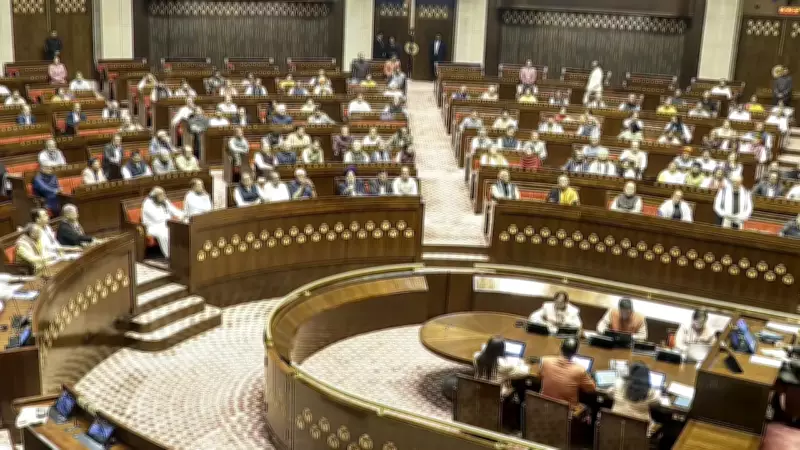
Parliament Budget Session 2026: Lok Sabha Commences Union Budget Debate Amid Political Tensions
The Lok Sabha convened on Wednesday to initiate a comprehensive general discussion on the Union Budget for the fiscal year 2026-27. The parliamentary proceedings began at 11 am with the customary Question Hour, followed by government business where several Union Ministers tabled official papers. Key ministries represented included Health and Family Welfare, Law and Justice, External Affairs, Defence, and Ports, Shipping and Waterways.
Private Members' Business: A Diverse Legislative Agenda
From 3.30 pm onwards, the focus shifted to Private Members' Business, where a significant number of Private Members' Bills were listed for introduction. The legislative proposals span a wide spectrum of national interests, reflecting the diverse concerns of parliamentarians.
- Constitutional and Electoral Reforms: Bills proposing amendments to the Constitution and modifications to the Representation of the People Act.
- Welfare Legislation: Targeted bills aimed at improving conditions for farmers, fishermen, students, senior citizens, women, and workers across various sectors.
- Sector-Specific Initiatives: Proposed legislation addressing education, healthcare, environmental protection, artificial intelligence regulation, digital platform governance, labour reforms, and social security enhancements.
Political Controversies Dominate Parliamentary Atmosphere
The budget discussions unfolded against a backdrop of ongoing political tensions. Opposition parties, led by the Congress, staged protests in Parliament following a contentious incident involving Leader of Opposition Rahul Gandhi. During a discussion on the 2020 India-China military standoff in Ladakh, Gandhi was barred from citing excerpts from an unpublished memoir of former Army Chief General MM Naravane.

Gandhi accused the government of suppressing the memoir's publication in India while allowing its availability abroad. "The government is not permitting its publication here. You can imagine where the book I am carrying today has come from," Gandhi stated during the heated exchange. Defence Minister Rajnath Singh and Home Minister Amit Shah repeatedly interrupted Gandhi's attempts to raise the China standoff issue, objecting to references from what they termed an unverified source.
Prime Minister's Rajya Sabha Address and BJP Counter-Moves
In parallel proceedings, Prime Minister Narendra Modi delivered a forceful address on the Motion of Thanks to the President's address in the Rajya Sabha. The Prime Minister launched a sharp critique of the Congress party, specifically targeting what he described as their "peak arrogance." Modi condemned a "traitor" remark directed at BJP MP Ravneet Singh Bittu, characterizing it as an insult to the Sikh community.
Adding to the political drama, BJP MP Nishikant Dubey announced plans to establish a library dedicated to documenting the actions of the Nehru-Gandhi family. "I have decided to set up a library dedicated to documenting the actions of the Nehru-Gandhi family, including allegations of corruption, the impact of their policies on the country, and the consequences of their personal conduct on national interests," Dubey declared in a social media post. He positioned this initiative as a research resource for students and future generations.
Session Schedule and Structural Framework
The ongoing Budget Session of Parliament comprises 30 sittings spread over 65 days, with a scheduled conclusion on April 2. Both Houses will adjourn for a recess beginning February 13, resuming deliberations on March 9. This intermission allows Standing Committees adequate time to thoroughly examine the Demands for Grants of various ministries and departments, ensuring detailed scrutiny of budgetary allocations.
As the session progresses, the intersection of substantive budget discussions, diverse legislative proposals, and intense political confrontations promises to shape India's parliamentary landscape through the coming weeks. The dual focus on economic policy through the budget debate and broader governance issues through private members' legislation reflects the comprehensive nature of parliamentary democracy in action.






