Parliament Approves Industrial Relations Code Amendment Bill Amid Heated Debate
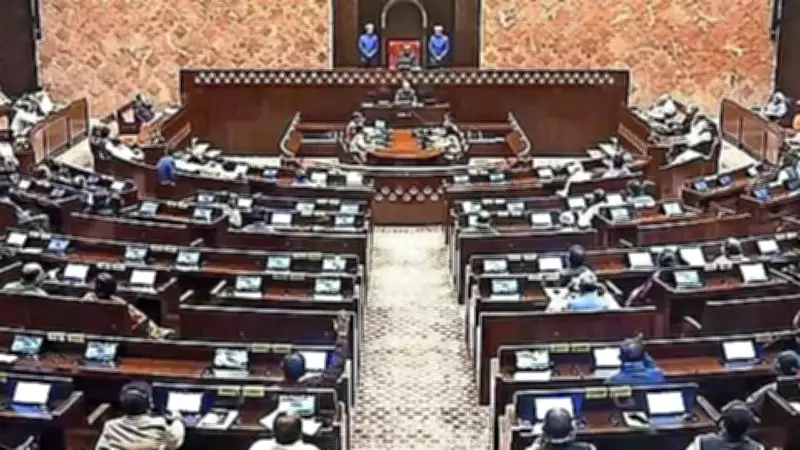
In a significant legislative move, the Parliament of India on Thursday passed the Industrial Relations Code (Amendment) Bill, 2026. The bill, which seeks to bring legal clarity over various labour issues, was approved by both Houses through a voice vote. This development has sparked intense political debate, with opposition members labeling the legislation as "anti-labour" while the ruling coalition hailed it as a historic reform.
Government Defends Bill as Pro-Labour Reform
Labour Minister Mansukh Mandaviya, while replying to the debate in Lok Sabha, strongly defended the bill. He emphasized that the four labour codes implemented approximately three months ago guarantee minimum wage for workers. According to Mandaviya, these codes ensure compulsory issuance of appointment letters and mandate uniform wages for the same work regardless of gender.
"The Modi government is fully committed to protecting labourers and workers while also saving industries," Mandaviya stated. He dismissed opposition charges, asserting that trade unions and workers support the legislation, and only those with political motives speak against it.

Opposition Voices Strong Criticism
Leader of the Opposition Mallikarjun Kharge presented a starkly different perspective during the Rajya Sabha debate. He argued that the four labour codes represent a systematic effort to undermine workers' rights. "The government has joined hands with corporates to strangle labourers by threatening job security and increasing working hours," Kharge claimed.
Congress leader Jairam Ramesh raised procedural concerns, noting that the Industrial Relations Code was originally passed on September 23, 2020, through a voice vote. "Today we are amending, with retrospective effect, a law that was passed six years ago," Ramesh pointed out. He criticized what he called a "complete failure of government" in not repealing the old Act before implementing the new law.
Key Amendments and Historical Context
Mandaviya provided historical context while piloting the bill in Rajya Sabha. He explained that when the Industrial Relations Code, 2020 was passed, it subsumed three existing labour laws:
- The Trade Union Act, 1926
- The Industrial Employment (Standing Orders) Act, 1946
- The Industrial Dispute Act, 1947
Ramesh expressed concern about the practical implications of the amendments, suggesting they would primarily enable "ease of firing" without corresponding "ease of hiring." This criticism reflects broader opposition fears about job security erosion.
Political Divide on Labour Policy
The parliamentary debate revealed a deep political divide on labour policy. BJP and its allies strongly defended the bill as a "historic reform" designed for labourer welfare. They argued that the legislation brings much-needed clarity to industrial relations while protecting worker rights.
Opposition members, however, accused the government of favoring industrialists over workers in drafting the industrial relations code. They maintained that the amendments would weaken labour protections and benefit corporate interests at the expense of workers' rights.
As the bill now moves forward for implementation, its impact on India's labour landscape remains a subject of intense scrutiny and debate across political and industrial circles.