

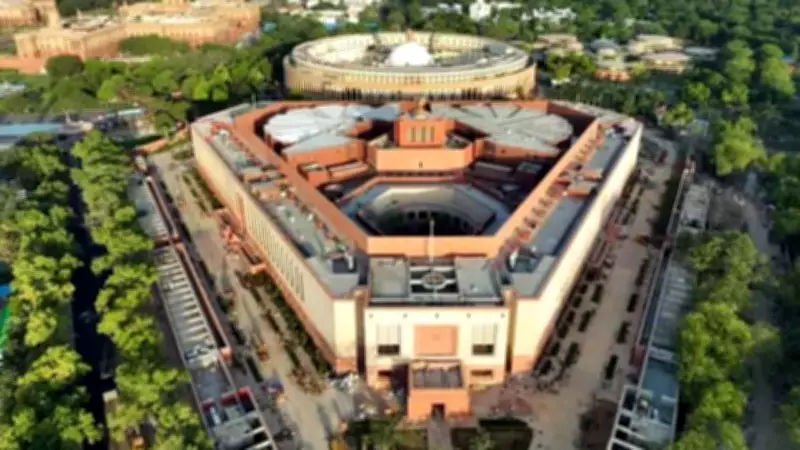
Parliament Set to Reconvene for Landmark Legislative Session
NEW DELHI: The budget session of Parliament is scheduled to reconvene from April 16, with the government poised to introduce at least two critical bills that promise to reshape India's political landscape. These legislative measures aim to significantly increase the number of Lok Sabha seats and implement a historic reservation for women in parliamentary and assembly elections.
Historic Expansion of Lok Sabha Seats
The government plans to pass bills that will increase the total number of Lok Sabha seats from the current 543 to an unprecedented 816 seats. This represents a substantial 50% expansion, marking the first such increase in over five decades. The 273 additional seats are specifically earmarked for women, ensuring that the new reservation system does not displace existing male parliamentarians.
With this expansion, the majority mark in the Lok Sabha will correspondingly rise to 409 seats. It is important to note that this change will only affect the Lok Sabha; the strength of the Rajya Sabha and state legislative councils will remain unchanged.

Constitutional Amendments for Women's Reservation
Alongside the delimitation bill, the government will introduce constitutional amendments to implement a one-third reservation for women in the next Lok Sabha elections and subsequent state assembly polls. This move is seen as putting an authoritative stamp on Prime Minister Narendra Modi's much-touted agenda of women's empowerment, especially as campaigning for four state assemblies gains momentum.
Parliamentary Affairs Minister Kiren Rijiju confirmed the upcoming session, stating in the Rajya Sabha on Thursday, "We have certain bills and important issues, and we have shared this with the opposition also. We are going to have a very important bill in the next two-three weeks."
Legislative Strategy and Political Outreach
The two houses of Parliament are expected to meet for either two or three days specifically to consider this proposed legislation. Although the governing NDA coalition lacks the two-thirds majority required to pass constitutional amendments independently, the government appears determined to push for passage during the budget session concluding on April 4.
Home Minister Amit Shah is leading the effort to secure support for both bills. On Monday, he conducted two crucial meetings: one with regional parties from outside the NDA bloc, including opposition parties and those unaligned with either major formation, and another with BJP's existing allies.
Should the bills fail to pass during the current session, the government remains open to convening a special short session specifically dedicated to the women's reservation legislation.
Broader Political Implications
This dual legislative initiative promises to fundamentally alter India's political dynamics. By increasing parliamentary representation while simultaneously ensuring significant female participation, the government aims to create a more inclusive political framework without disrupting the existing political order.
The proposed changes come at a crucial juncture in Indian politics, with the campaign for multiple state assemblies already underway and national elections on the horizon. The successful passage of these bills would represent one of the most significant structural changes to India's parliamentary system in recent history.

