Parliament Session Washouts: A Cartoonist's Sharp Critique of Political Gridlock
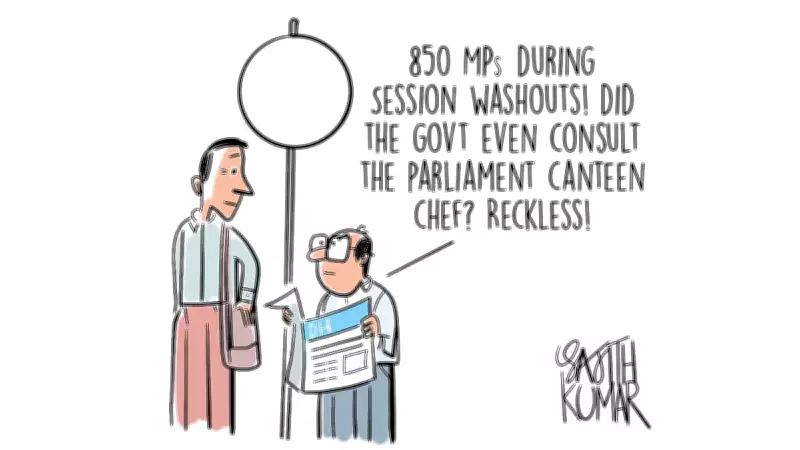
A recent cartoon published by Deccan Herald has sparked discussions by humorously yet pointedly addressing the recurring issue of Parliament session washouts in India. The artwork serves as a satirical commentary on the persistent political gridlock that often leads to legislative paralysis, drawing attention to the broader implications for democratic governance and public accountability.
The Visual Satire on Parliamentary Dysfunction
The cartoon cleverly depicts scenes of empty parliamentary halls and idle lawmakers, symbolizing the wasted opportunities for debate and lawmaking. Through exaggerated imagery and witty captions, it underscores how frequent adjournments and disruptions have become a norm, rather than an exception, in recent sessions. This artistic expression resonates with citizens who are increasingly frustrated by the lack of productivity in the nation's highest legislative body.
Impact on Governance and Public Trust
Beyond the humor, the cartoon highlights serious consequences of session washouts. Key bills and policies often get delayed, affecting critical areas such as economic reforms, social welfare schemes, and national security. This legislative stagnation not only hampers governance but also erodes public trust in political institutions. As the cartoon suggests, when Parliament fails to function, it sends a message of inefficiency and discord to the electorate.

Historical Context and Recent Trends
Parliament session washouts are not a new phenomenon in India, but their frequency has increased in recent years due to heightened political polarization. Data shows that multiple sessions have been marred by protests, walkouts, and adjournments, leading to minimal legislative output. The cartoon references this trend, pointing to a cycle where opposition parties and ruling coalitions clash, prioritizing political point-scoring over public service.
- Disruptions often stem from contentious issues like corruption allegations or policy disagreements.
- Washouts result in financial losses, with taxpayers funding sessions that yield little outcome.
- The backlog of pending legislation grows, delaying reforms and development initiatives.
Broader Implications for Democracy
The Deccan Herald cartoon serves as a reminder of the foundational role of Parliament in a democracy. When sessions are washed out, it undermines the principles of deliberation and consensus-building that are essential for a healthy political system. Citizens rely on their elected representatives to address pressing issues, and prolonged gridlock can lead to disillusionment and apathy. This artistic critique calls for introspection among political leaders to prioritize national interests over partisan agendas.
In conclusion, the cartoon on Parliament session washouts is more than just a piece of satire; it is a poignant reflection on the state of Indian politics. By blending humor with hard-hitting truths, it urges stakeholders to foster a more constructive and productive parliamentary environment, ensuring that democracy functions as intended for the benefit of all citizens.