The Winter Session of Parliament, which commenced on December 1, has been marked by significant turmoil and repeated disruptions in both the Lok Sabha and the Rajya Sabha during its initial week. Lawmakers from opposing sides clashed on multiple pressing issues, leading to minimal legislative work being conducted.
Key Issues Sparking Confrontation
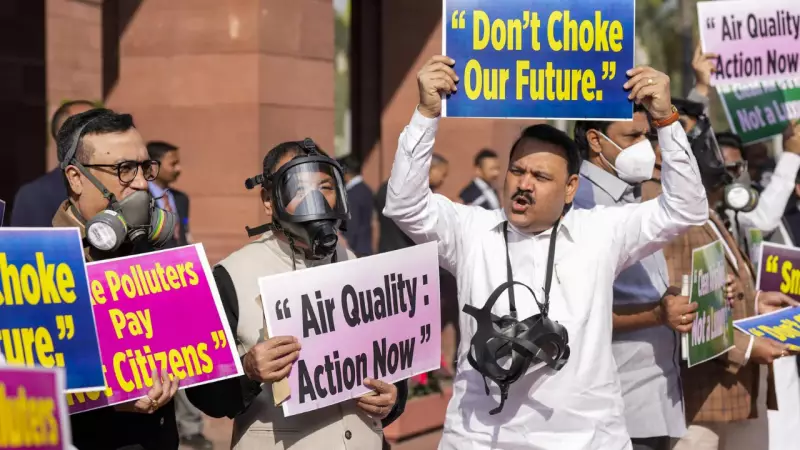
The first day set the tone, with Lok Sabha proceedings being stalled three times between 11 am and 2 pm, resulting in a mere 50 minutes of productive work. The government and the opposition traded accusations, with the former blaming the opposition for obstructing business. Opposition members, however, insisted on urgent discussions concerning the Special Intensive Revision (SIR) of electoral rolls and the severe air pollution crisis in the Delhi-NCR region.
In the Rajya Sabha, the opposition escalated their protest by staging a walkout, demanding a dedicated debate on the electoral roll revision process. The issues at the forefront of the disruptions were multifaceted.

Environmental and Economic Alarms
MPs raised serious concerns as Delhi-NCR's Air Quality Index (AQI) consistently breached the 'severe' mark of 400-plus. Parliamentarian D. Deo highlighted that the toxic air was impacting crores of citizens, including vulnerable groups like children and the elderly, and criticized developmental policies that harm the environment.
Outside the Parliament, Congress president and Rajya Sabha Leader of Opposition, Mallikarjun Kharge, pointed to economic troubles, noting the Indian rupee weakening past ₹90 against the US dollar. He attributed the currency's decline to government policies, stating it reflected poor economic management.
Legislative Agenda Amidst Chaos
Despite the logjam, the government aims to push through a reform-oriented legislative agenda before the session concludes on December 19. Several key bills are slated for discussion and passage:
- Insurance Laws (Amendment) Bill, 2025: Proposes to increase Foreign Direct Investment (FDI) in the insurance sector from 74% to 100%.
- New Tax Structure for Tobacco and Pan Masala: Involves the Central Excise (Amendment) Bill, 2025, and the Health Security and National Security Cess Bill, 2025, aiming to replace the GST compensation cess.
- Securities Markets Code Bill, 2025: Seeks to consolidate three existing securities laws into a single unified code to simplify compliance.
- Jan Vishwas Bill, 2025: Currently with a Select Committee, focusing on decriminalizing minor offences to reduce regulatory burdens.
- Other significant bills include amendments to the Insolvency and Bankruptcy Code, changes to Manipur GST, and updates to National Highways regulations.
On the legislative front, Minister of State for Science & Technology, Jitendra Singh, provided an update on the Atomic Energy Bill 2025, stating it is in an 'advanced stage' with inter-ministerial suggestions being incorporated, and assured that MPs' concerns would be addressed.
A Temporary Truce and Scheduled Debates
After days of deadlock, a temporary resolution was reached regarding the debate on the Special Intensive Revision. The government agreed to hold the discussion under the broader umbrella of election reforms. Parliamentary Affairs Minister Kiren Rijiju announced the schedule:
December 8 will see a special debate on 'Vande Mataram', followed by a debate on Election Reforms, including the SIR, on December 9. Each discussion has been allocated 10 hours, with the possibility of an extension if required.
While the agreement may ease tensions temporarily, the Winter Session's productivity remains under scrutiny as it navigates a packed agenda amidst persistent political disagreements.