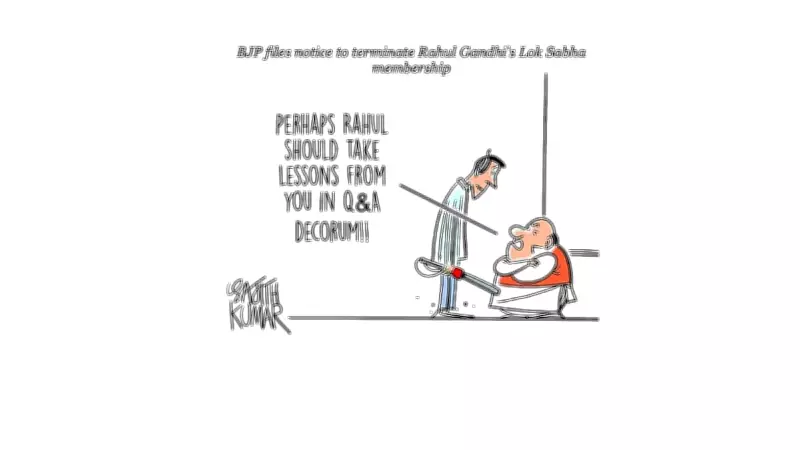
Parliamentary Q&A Decorum: A Lesson in Political Conduct
The Question Hour in India's Parliament is a cornerstone of democratic accountability, where elected representatives pose queries to the government on matters of public interest. However, recent sessions have underscored the critical need for maintaining decorum during these exchanges. This analysis delves into the importance of respectful conduct in parliamentary proceedings, examining incidents that have marred the Question Hour and the broader implications for India's political landscape.
The Role of Question Hour in Democracy
Question Hour serves as a vital mechanism for transparency and oversight, allowing Members of Parliament to hold the executive branch accountable. Typically held at the beginning of each parliamentary day, this session enables lawmakers to seek clarifications on government policies, expenditures, and actions. It is a time-honored tradition that fosters informed debate and ensures that the government remains answerable to the people through their representatives.
In recent years, however, the decorum of Question Hour has been compromised by disruptions, heated arguments, and a lack of civility. These incidents not only hinder the legislative process but also erode public trust in democratic institutions. The sanctity of parliamentary proceedings must be upheld to preserve the integrity of India's democracy.

Incidents Highlighting the Need for Decorum
Several high-profile episodes have brought the issue of parliamentary decorum to the forefront. For instance, during a recent session, exchanges between ruling and opposition party members escalated into verbal altercations, leading to adjournments and a loss of productive time. Such behavior detracts from the substantive issues at hand and shifts focus to partisan conflicts.
Moreover, the use of unparliamentary language and personal attacks has become increasingly common, undermining the respectful discourse that should characterize legislative debates. These actions set a poor example for citizens and can polarize political discourse outside the Parliament as well.
The Impact on Governance and Public Perception
When decorum breaks down during Question Hour, it has tangible effects on governance. Important questions remain unanswered, and critical policy discussions are sidelined. This can delay legislative action and impede the government's ability to address pressing national issues. Additionally, the public's perception of Parliament as a forum for reasoned debate is damaged, potentially leading to disillusionment with the democratic process.
To mitigate these impacts, there is a growing call for stricter enforcement of parliamentary rules and codes of conduct. Senior parliamentarians and presiding officers have emphasized the need for self-restraint and mutual respect among members. By adhering to established protocols, lawmakers can ensure that Question Hour fulfills its intended purpose of fostering accountability and transparency.
Lessons for Political Conduct
The recent incidents serve as a stark reminder of the importance of decorum in political life. Parliamentarians must lead by example, demonstrating that robust debate can coexist with civility. This involves listening attentively to opposing viewpoints, responding with factual arguments rather than personal jibes, and prioritizing the public interest over partisan gains.
Furthermore, media coverage of parliamentary proceedings plays a crucial role in shaping public opinion. By highlighting instances of both decorum and disruption, the media can encourage a culture of respect within political circles. Educational initiatives and training programs for new MPs on parliamentary etiquette could also contribute to improved conduct.
In conclusion, the decorum of Question Hour is not merely a procedural matter but a reflection of the health of India's democracy. Upholding respectful discourse in Parliament is essential for effective governance and public trust. As the nation navigates complex challenges, a return to the principles of decorum and accountability in parliamentary exchanges will strengthen democratic institutions and foster a more collaborative political environment.