

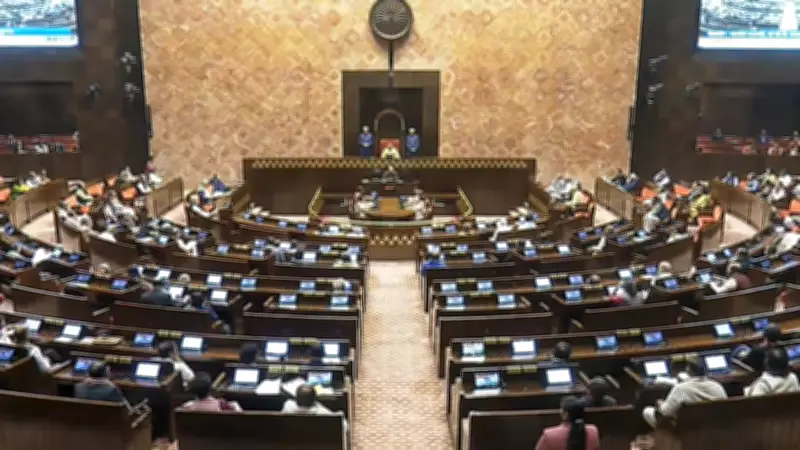
The Erosion of Parliamentary Purpose and Accountability
The parliamentary system in India was designed with a fundamental purpose: to ensure that the executive remains answerable to the people and their representatives in real-time, not merely at the end of a five-year electoral cycle. This core principle of immediate accountability is what distinguishes a vibrant democracy from an autocratic regime. However, when a government consistently treats this essence as dispensable, it raises profound questions about the health of our democratic institutions. The current standoff in Parliament is not just a temporary political skirmish; it is a symptom of a deeper, more systemic malaise that threatens to hollow out the very foundations of our governance.
A Missed Opportunity for Democratic Leadership
Imagine an alternative scenario where the recent deadlock in Parliament could have been resolved with statesmanship and confidence. In a parliamentary democracy, it is not unusual for a strident Opposition to seek to corner the government on contentious issues. Suppose the Prime Minister had chosen to sit in the House during the Leader of the Opposition's speech. When ruling party members objected to certain points, the Prime Minister could have risen to assert that the government has nothing to fear, allowing the Opposition leader to proceed uninterrupted.
Such a gesture would have projected the ruling party as confident, democratic, and unafraid of scrutiny. It would have shifted the advantage to the government, reduced the media spectacle around the Opposition, and potentially averted the deadlock altogether. More importantly, it would have reinforced the respectability of Parliament as an institution. The failure to adopt this course of action prompts critical reflection: Is this a tactical misstep by the ruling party, or does it reflect a deeper ideological disdain for parliamentary norms?

The Ideological Underpinnings of Institutional Disregard
The present situation is not merely about personal idiosyncrasies or longstanding political acrimony. It is indicative of a broader trend where institutions are being systematically hollowed out. Two coexisting tendencies are at play here. First, there is a deeply ingrained belief within the ruling party leadership that they are on a divine mission to represent the nation, viewing any opposition as a conspiracy against both the government and the country itself. This self-perception as champions of good against evil often leads to a dismissal of formal institutional procedures as unnecessary constraints.
Second, this ideological stance is compounded by a preexisting culture among India's elites, dating back to Independence, of creating institutions without fully embracing their underlying values. Politicians, civil servants, judges, and other elites have historically exhibited a formalistic approach, bending or bypassing institutions when convenient. This culture of instrumentalism is now being exacerbated by a regime that prioritizes its perceived mission over democratic accountability.
The Broader Impact on Democratic Institutions
The consequences of this hollowing out extend far beyond Parliament. We are witnessing a decline across various institutions:
- The Judiciary: Instances of abdication of its independent role.
- The Lokpal: Displaying docility in the face of executive overreach.
- Investigative Agencies: Often acting with servility rather than impartiality.
- The Election Commission: Engaging in practices that may harass voters rather than protect their rights.
These trends reflect a flimsy and instrumental approach to institutions, where their primary function is subordinated to political or ideological objectives. The normalization of such behavior—such as military officers attending religious ceremonies in uniform, judges participating in political rituals, or the Prime Minister assuming roles akin to a religious leader—signals an ongoing process of deinstitutionalization.

The Long-Term Implications for Democracy
In the short term, the current parliamentary standoff may devolve into mutual mudslinging and superficially balanced commentary. However, over the next decade, this event could become part of a larger narrative where institutions lose their meaning and even become detrimental to citizens' rights. Once institutions are rendered ineffective, the pathway to replacing them with alternative structures becomes alarmingly easy. This poses a direct threat to the democratic framework that has sustained India since its independence.
The hollowing out of Parliament is not just a political issue; it is a democratic crisis that demands urgent attention. Restoring the essence of parliamentary accountability requires a collective recommitment to institutional integrity, transcending partisan interests to safeguard the foundations of our democracy for future generations.





