

Parliamentary Storm Erupts Over Rahul Gandhi's Speaking Rights
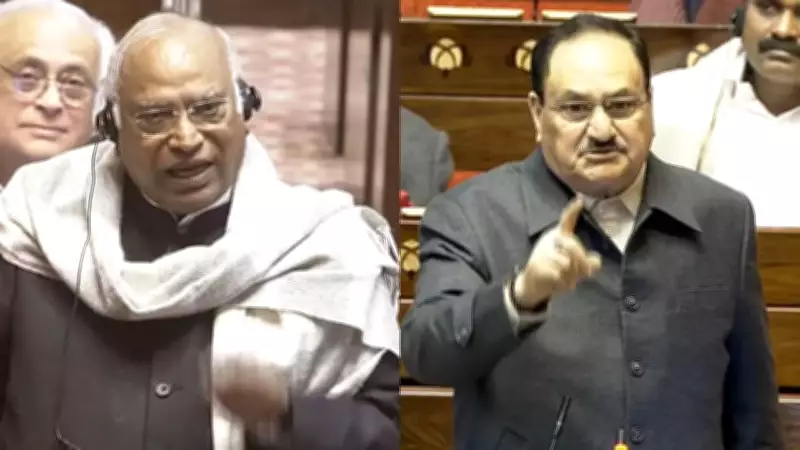
A significant parliamentary confrontation erupted in the Rajya Sabha on Thursday, creating dramatic scenes as opposition leaders clashed with government ministers over speaking rights in the Lower House. The controversy centered on allegations that Lok Sabha Leader of Opposition Rahul Gandhi was being systematically prevented from addressing Parliament on matters of national importance.
Kharge's Fiery Accusation Sparks Debate
Raising the issue during proceedings, Leader of Opposition in Rajya Sabha Mallikarjun Kharge launched a sharp critique of the government's parliamentary conduct. "Parliament means Lok Sabha and Rajya Sabha," Kharge asserted. "The LoP of Lok Sabha wanted to speak on the country's interests, but was not allowed to speak. How can you run the House like this?"
The opposition has been protesting what they describe as deliberate attempts to block Rahul Gandhi from addressing the Lok Sabha, with particular reference to former Army Chief General MM Naravane's unpublished memoir concerning the 2020 India-China standoff. Kharge emphasized that the parliamentary deadlock has persisted for four consecutive days, severely impacting legislative functioning.

Government's Constitutional Counterargument
The remarks immediately triggered strong objections from Leader of the House JP Nadda and Parliamentary Affairs Minister Kiren Rijiju, who presented a constitutional argument against discussing Lok Sabha matters in the Upper House. "The LoP should know that the proceedings of the Lok Sabha cannot be discussed in the Rajya Sabha," Nadda firmly stated, referencing previous rulings by parliamentary chairpersons on this procedural matter.
Nadda further elaborated that the Modi government remains prepared for comprehensive discussions on all relevant issues. "I want to give a message to Congress and the nation that the government under Prime Minister Modi is ready for all discussions," he declared, while accusing the opposition of deliberately disrupting parliamentary proceedings.
Kharge's Persistent Criticism and Historical References
Undeterred by the government's response, Kharge continued his criticism with heightened intensity. "You have given me an opportunity to speak about the democratic principles of the country," he remarked, emphasizing the bicameral nature of India's parliamentary system. "Parliament comprises the Lok Sabha and the Rajya Sabha. As per our Constitution, we have two chambers. But the Lok Sabha LoP is not allowed to speak."
The veteran Congress leader accused the government of paralyzing one House to conceal its shortcomings, using the Hindi phrase "aapko khujli uthti hai" (you get itchy) to describe the ruling party's alleged discomfort when Rahul Gandhi raises national issues. He also condemned what he characterized as the "humiliation" of former Prime Ministers Jawaharlal Nehru and Indira Gandhi by BJP parliamentarians.
Ministerial Rebuttals and Counteraccusations
Finance Minister Nirmala Sitharaman entered the debate with historical counterexamples, challenging Kharge's allegations about the government's record. "I heard him say you people lynch. I want that word removed," she stated before referencing incidents during Congress state governments. "Let me remind you, under the Congress government in Rajasthan, based on a BJP leader's comment, there was the lynching of a tailor, and no action was taken. In Kerala, under the Congress, the hands of a teacher were chopped off. What action did they take?"
Nadda reinforced his position by highlighting specific instances where the government had accommodated opposition demands, including a statement on the India-US trade deal delivered by Commerce Minister Piyush Goyal. He criticized what he called the opposition's exaggeration of democratic threats, stating "Saying that democracy is in danger is wrong, and I condemn it."

Broader Parliamentary Context and Implications
The parliamentary impasse has been escalating since Monday, with repeated disruptions occurring over the opposition's persistent demand that Rahul Gandhi be permitted to speak in the Lok Sabha. The stalemate reached a critical point earlier this week when Prime Minister Narendra Modi was scheduled to reply to the Motion of Thanks on the President's Address but cancelled his speech due to continuous uproar and protests.
This confrontation represents more than a procedural disagreement—it reflects deepening political tensions between the ruling coalition and opposition parties regarding parliamentary norms, speaking rights, and the broader functioning of democratic institutions. The exchange of sharp accusations about historical incidents, constitutional interpretations, and parliamentary conduct suggests that resolving this impasse may require significant political negotiation and compromise.
As both sides remain entrenched in their positions, the ongoing parliamentary disruption raises important questions about legislative productivity, opposition rights, and the maintenance of democratic decorum in India's highest law-making body. The coming days will reveal whether parliamentary normalcy can be restored or whether this confrontation will further intensify India's political landscape.





