

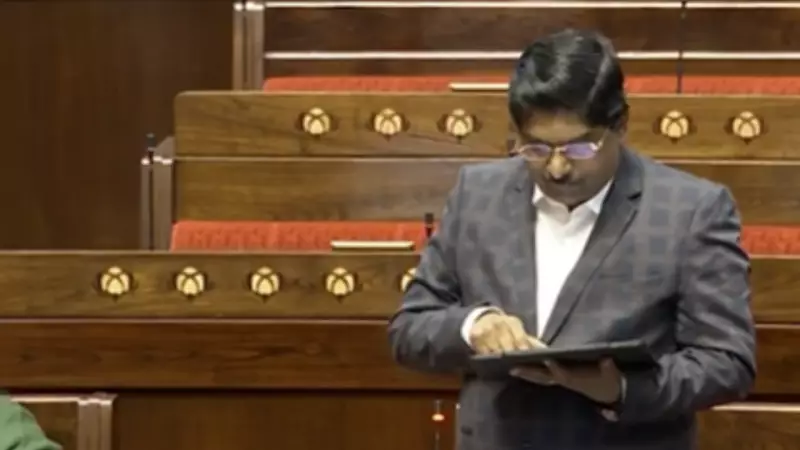
The severe air pollution crisis in the national capital forcefully entered parliamentary proceedings on Wednesday, even as the Rajya Sabha took up a bill concerning water pollution in Manipur. The discussion took a sharp turn towards Delhi's own environmental emergency, with a strong plea for administrative decentralisation to tackle the root cause of the smog.
Call to Decongest the National Capital
Raising the issue during the debate, DMK MP P Wilson suggested the government must seriously reconsider holding the winter session of Parliament when Delhi transforms into what he termed a "gas chamber." He proposed that the constitutional requirement for the number of parliamentary sitting days could be met by working more during other sessions, thereby avoiding the peak smog months.
Wilson argued there is no constitutional mandate that every constitutional body or authority must be located solely in Delhi. He put forth a radical idea for decentralisation, suggesting the government establish regional benches of the Supreme Court in major metros like Chennai, Mumbai, and Kolkata to reduce the load on the apex court.

"Similarly, [the government] should shift ministries and statutory bodies to other states. Spread the administrative load across the country. Let’s decongest Delhi and allow Delhi to breathe good air," the MP asserted. He highlighted that Delhiites are losing over eight years of their life expectancy due to toxic air, pinning the blame on traffic congestion, vehicular emissions, and the over-centralisation of all functions in one city.
Government's Response and Action Plan
In his reply, Union Environment Minister Bhupender Yadav acknowledged that Delhi's air pollution is a significant concern for the government. He detailed the steps being taken, noting that since August, six meetings have been held with the country's agriculture minister and counterparts from the states of Haryana, Uttar Pradesh, Punjab, and Rajasthan to address stubble burning, a major seasonal contributor.
"If you compare with 2019, stubble burning has reduced by 2016," Yadav stated, indicating a downward trend. He also emphasised the need to tackle other "anthropocentric" activities such as dust, and vehicular and industrial pollution, assuring the House that the government is implementing several measures to combat these persistent problems.
A Broader Parliamentary Concern
The intervention by Wilson resonated with several other members who also referred to the ongoing air emergency in Delhi during the discussion, showcasing the widespread concern over the issue that transcends regional politics. The debate underscored a growing demand for innovative, structural solutions beyond temporary fixes, questioning why governance in 2025 must operate from a single, choked hub as it did in 1950.
The exchange in the Upper House has thrust the link between administrative centralisation and environmental degradation into the spotlight, prompting a national conversation on whether dispersing governance could be a key to unlocking cleaner air for the capital's residents.






