

Tharoor Condemns Government's 'Overreaction' for Paralyzing Lok Sabha, Asks Why It Fears Discussion on Book Controversy
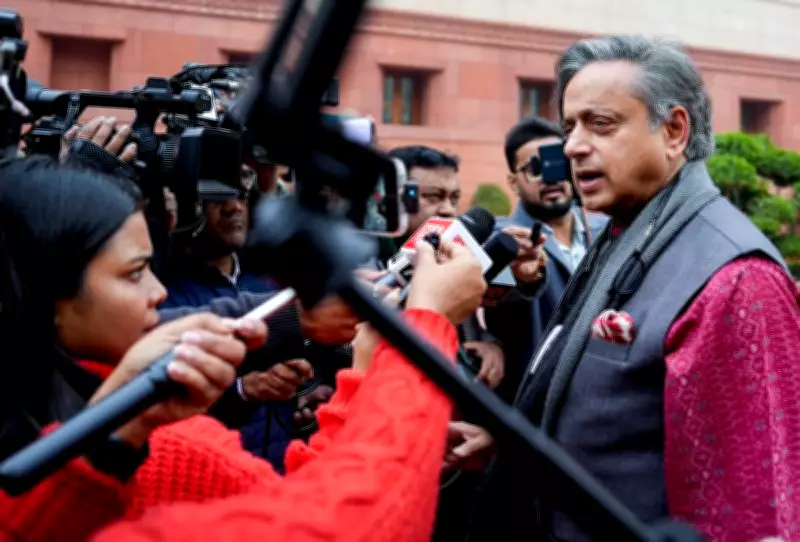
Congress Member of Parliament Shashi Tharoor has launched a sharp critique against the government, accusing it of an overreaction that has led to the paralysis of Lok Sabha proceedings. In a recent statement, Tharoor questioned the government's apparent reluctance to engage in a discussion over a contentious book row, highlighting what he perceives as a fear of open debate within the parliamentary framework.
Parliamentary Paralysis Amidst Controversy
The Lok Sabha has been experiencing significant disruptions, with Tharoor attributing this to the government's handling of the book row issue. According to Tharoor, the administration's response has been disproportionate, resulting in a stalled legislative process that hampers the functioning of democracy. He emphasized that such paralysis undermines the core principles of parliamentary democracy, where discussion and deliberation are essential for governance.
Questioning the Government's Motives
Tharoor pointedly asked why the government seems afraid of discussing the book row in the Lok Sabha. He suggested that this avoidance might stem from a desire to suppress dissenting voices or avoid scrutiny on sensitive topics. By not allowing a debate, Tharoor argued, the government is sidestepping accountability and failing to uphold the democratic right to free expression and inquiry.

Implications for Democratic Discourse
The ongoing situation raises broader concerns about the state of democratic discourse in India. Tharoor's comments underscore the importance of maintaining open channels for discussion in Parliament, especially on issues that spark public interest or controversy. He called for a return to normalcy in Lok Sabha proceedings, urging the government to embrace dialogue rather than resort to tactics that lead to gridlock.
In summary, Shashi Tharoor's remarks highlight a critical moment in Indian politics, where the government's approach to parliamentary discussions is being scrutinized. His call for transparency and debate serves as a reminder of the vital role that constructive engagement plays in a functioning democracy.






