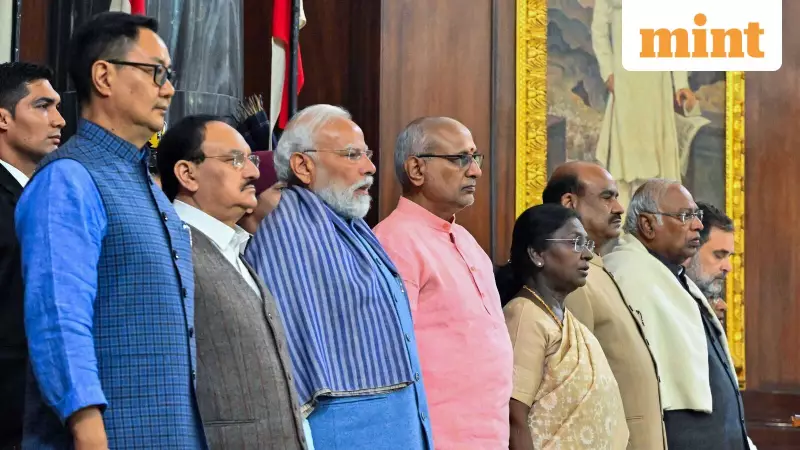
The Winter Session of Parliament commences on Monday, December 1, with the government listing ten significant legislative proposals for introduction, including landmark reforms to open India's civil nuclear sector to private participation.
Major Legislative Overhauls Planned
The Atomic Energy Bill, 2025 stands as the most prominent legislation, aiming to revolutionize India's nuclear energy landscape. This groundbreaking bill seeks to permit non-government entities to operate atomic power generation plants alongside the state-owned Nuclear Power Corporation of India. This reform aligns with India's ambitious target of achieving 100 GW of nuclear energy capacity by 2047.
Another transformative legislation, The Higher Education Commission of India Bill, proposes to replace existing regulatory bodies like the University Grants Commission (UGC). The new commission will facilitate universities and higher educational institutions to become independent and self-governing while promoting excellence through robust accreditation systems.

Economic and Financial Reforms
The government has prioritized several economic reforms, including The Insurance Laws (Amendment) Bill, 2025, which follows the Union Budget's proposal to remove the 74% foreign direct investment limit in the insurance sector. The bill aims to deepen insurance penetration, accelerate growth, and promote ease of doing business.
The Securities Markets Code Bill, 2025 represents a significant consolidation effort, proposing to merge provisions from the SEBI Act, 1992, Depositories Act, 1996, and Securities Contracts (Regulation) Act, 1956 into a single, rationalized code.
Other economic reforms include The Corporate Laws (Amendment) Bill, 2025 to amend the Companies Act, 2013 and LLP Act, 2008, and The Insolvency and Bankruptcy Code (Amendment) Bill, 2025 which introduces provisions for cross-border insolvency and removes fast-track processes for small companies.
Infrastructure and Governance Bills
The National Highways (Amendment) Bill aims to facilitate faster and more transparent land acquisition for national highways, while The Constitution (131st Amendment) Bill, 2025, though still under consideration, proposes to include Chandigarh in Article 240 to ensure uniform treatment with other union territories lacking legislatures.
The legislative agenda also includes The Arbitration and Conciliation (Amendment) Bill, 2025 and The Jan Vishwas Bill, which amends 17 Acts by removing imprisonment provisions for minor offences and rationalizing penalties.
The Winter Session, comprising 15 sittings, will conclude on December 19 and will also consider the first supplementary Budget for the year. This session marks the final parliamentary gathering before the crucial budget session typically beginning January 31.