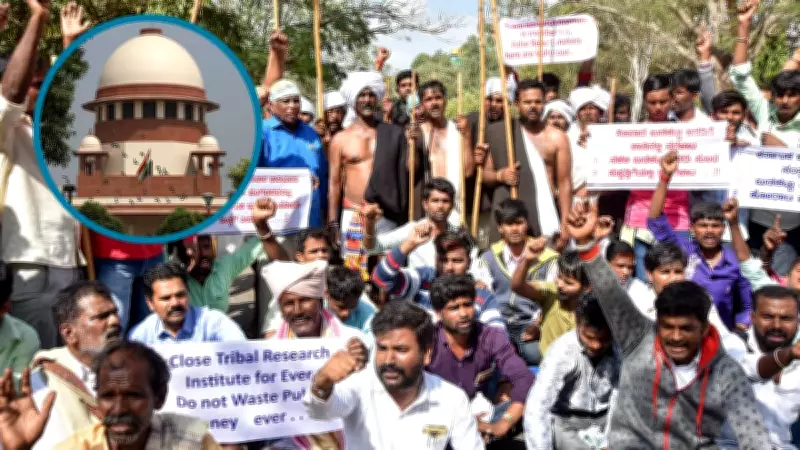
The Bharatiya Janata Party has raised questions over reservation benefits extended to converted Scheduled Tribes (STs), sparking a debate on the role of religion in quota policies. Experts, however, have defended the current system, asserting that the quota is based on socio-educational backwardness and not on religious identity.
Background of the Controversy
The issue came to the fore after the Karnataka government confirmed that STs who converted to other religions, such as Christianity or Islam, continue to enjoy reservation benefits. The BJP has argued that this practice undermines the original purpose of the quota system, which was intended to uplift historically disadvantaged communities within the Hindu fold. Party leaders have demanded a review of the policy, claiming that converted individuals no longer face the same social discrimination.
Expert Opinion: Religion-Neutral Quota
Legal and social experts have countered the BJP's stance, emphasizing that the Indian Constitution does not link reservation to religion. Justice Das, a former High Court judge, stated: "Quota is to be based on socio-educational backwardness, not religion. The moment a person converts, their socio-economic status does not automatically improve." He added that many converted STs continue to face caste-based discrimination within their new religious communities.

Historical Context of ST Reservations
The reservation for Scheduled Tribes was introduced to address historical injustices faced by tribal communities. The Constitution (Scheduled Tribes) Order, 1950, initially restricted benefits to Hindus, but subsequent amendments extended them to all religions. In 1956, the government clarified that conversion does not affect ST status, a position upheld by the Supreme Court in several judgments.
Political Reactions
- BJP's Stand: The party argues that the policy is being misused and that benefits should be limited to those who remain within the Hindu, Sikh, or Buddhist faiths.
- Congress Response: The Congress party has accused the BJP of trying to divide communities and undermining constitutional principles.
- Dalit and Tribal Groups: Several organizations have expressed concern that any change could deprive genuine beneficiaries of their rights.
Judicial Precedents
The Supreme Court, in cases like State of Kerala v. N.M. Thomas (1976) and E.V. Chinnaiah v. State of Andhra Pradesh (2005), has held that reservation is not religion-specific. The court noted that caste and tribe identities persist even after conversion, and therefore, benefits should continue.
Way Forward
Experts suggest that any review of the policy should be based on empirical data on the socio-economic conditions of converted STs. They caution against politicizing the issue and urge the government to focus on ensuring that the most backward sections receive the intended benefits.
The debate is likely to intensify as Karnataka heads into elections, with both the ruling and opposition parties using the issue to consolidate their vote banks.