

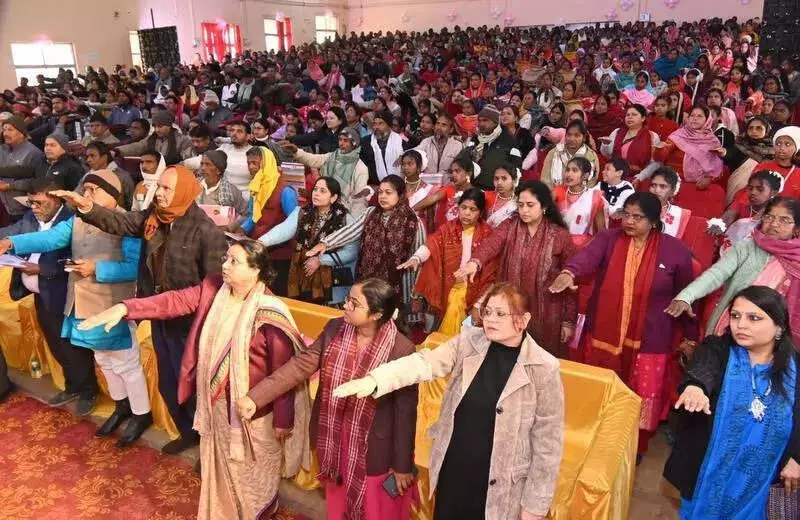
Massive Grassroots Mobilization in Jharkhand to Tackle Social Evils
In a significant push to address deep-rooted social issues, the state of Jharkhand has mobilized an extensive network of over 44,000 frontline workers for a comprehensive statewide outreach program. This ambitious campaign, which was officially launched in December of last year, specifically targets the eradication of child marriages, human trafficking, and the archaic practice of witch-hunting.
Community-Driven Strategy for Prevention
The initiative is fundamentally built on a community-centric approach, emphasizing grassroots participation and collective responsibility. It focuses on three core pillars: enhancing community-level vigilance, conducting sustained awareness campaigns, and establishing robust early reporting mechanisms. By involving local stakeholders directly, the program aims to create a self-sustaining ecosystem of prevention and intervention.
Widespread Reach and Diverse Stakeholder Engagement
Spanning across all 44 subdivisions in Jharkhand, the campaign has successfully engaged a wide array of frontline stakeholders. This includes sub-divisional officers, district social welfare officers, deputy commissioners, and deputy development commissioners (DDCs). At the block level, block education extension officers (BEEOs), supervisors, and teachers from Kasturba Gandhi Balika Vidyalaya are actively participating.

The outreach extends further to incorporate representatives from JSLPS, members of self-help groups, ward members, ASHAs, Sahiyas, and traditional leaders like Manki Munda. Village heads, panchayati raj representatives, and Anganwadi workers are also integral to this massive mobilization, ensuring that the message permeates every corner of the state.
Addressing Alarming Statistics on Child Marriage
Kiran Kumari Pasi, Director of the Department of Women, Child Development and Social Security, highlighted the urgent need for this intervention. "The stakeholders have been supervised to coordinate in curbing child marriage and other evil practices," she stated. The data underscores the severity of the issue: according to the National Family Health Survey – 5, Jharkhand's child marriage rate stands at a staggering 32%. This means that approximately one in every three marriages in the state involves a minor, significantly higher than the national average of 23%.
To combat this, frontline workers are trained to prevent such incidents and report them immediately through dedicated helplines, including Child Helpline 1098, Women Helpline 181, and the Emergency Response Support System (ERSS-112).
Comprehensive Training and Awareness Modules
The frontline workers underwent an intensive 20-day training program that commenced on December 19. This training disseminates crucial information on their roles and responsibilities, utilizing various tools such as screening films and videos on state schemes and the devastating impacts of child marriage.
The training modules meticulously detail the multifaceted ill-effects of child marriage, which include:
- Loss of childhood and interruption in education
- Early maternal anaemia and higher maternal mortality rates
- Increased infant mortality and risks of domestic violence
- Sexual abuse and severe mental health risks
Officials emphasize that girls aged 15–19 face significantly higher maternal mortality risks. Additionally, babies born to mothers under 18 years of age are 10% more likely to die within their first year, highlighting the critical health implications.
Promoting Legal Awareness and Government Schemes
The outreach program also serves as a platform to publicize key government schemes designed to prevent child marriage and empower adolescents and women. These include:

- Savitribai Phule Kishori Samriddhi Yojana
- Kasturba Gandhi Balika Vidyalaya
- Chief Minister Kanyadaan Scheme
- Mission Vatsalya
- Bicycle distribution initiatives
- The School Health and Wellness Programme
- The National Adolescent Health Programme
- Various scholarship schemes
Sarojini Toppo, Warden of PM Shri KGBV in Sonahatu, explained the educational component: "Legal provisions such as the Prohibition of Child Marriage Act, 2006, the POCSO Act, 2012, the Juvenile Justice (Care and Protection) Amendment Act, 2021, and constitutional safeguards are being explained to locals and schoolgirls." To enhance engagement, creative activities like slogan writing, painting, and nukkad natak (street plays) are actively encouraged and promoted.
This holistic campaign represents a determined effort by the Jharkhand government to leverage community power, legal frameworks, and welfare schemes to create a safer and more equitable environment for women and children across the state.





