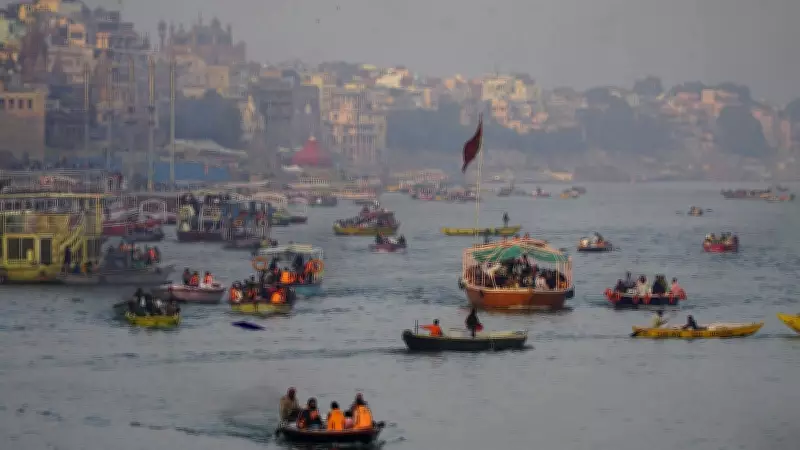
The Allahabad High Court on Monday granted bail to five persons accused of throwing non-vegetarian food waste into the Ganga river in Varanasi, observing that such acts could hurt the religious sentiments of devotees. The court remarked that the Ganga is revered by millions and any desecration, including disposal of non-veg leftovers, is unacceptable.
Case Background
The incident occurred during an iftar party organized on the banks of the Ganga in Varanasi. According to the prosecution, the accused threw leftover non-vegetarian food and waste into the river, which led to protests from local residents and religious groups. A case was registered under various sections of the Indian Penal Code and the Environment Protection Act.
Court's Observation
Justice Ajay Bhanot, while granting bail, noted that the Ganga holds a special place in Hindu faith and is considered a goddess. He stated, "Throwing non-vegetarian food waste into the Ganga could hurt the religious sentiments of a large section of society." The court, however, clarified that it was not commenting on the merits of the case but only on the bail application.

Bail Conditions
The accused were granted bail on a personal bond of Rs 25,000 each and one surety of the same amount. They have been directed to cooperate with the investigation and not tamper with evidence. The court also asked them to ensure that they do not repeat such acts in the future.
Reactions and Implications
The order has sparked debate among legal experts and environmentalists. While some argue that the court's observation is valid given the religious significance of the river, others point out that the primary concern should be environmental pollution. The Ganga is already heavily polluted, and any waste disposal, regardless of its nature, harms the ecosystem.
Local religious leaders welcomed the court's stance, stating that it upholds the sanctity of the river. However, they also called for stricter enforcement of laws to prevent such incidents. Environmental activists emphasized the need for comprehensive waste management along the riverbanks to protect both religious sentiments and the environment.
Previous Cases
This is not the first time the Allahabad High Court has taken a strong stand on the protection of the Ganga. In several earlier judgments, the court has directed the government to take measures to clean the river and prevent pollution. The court has also banned the dumping of industrial waste and sewage into the Ganga.
The iftar party row highlights the ongoing tension between religious practices and environmental conservation. While the court has addressed the religious aspect, the larger issue of river pollution remains unresolved.