

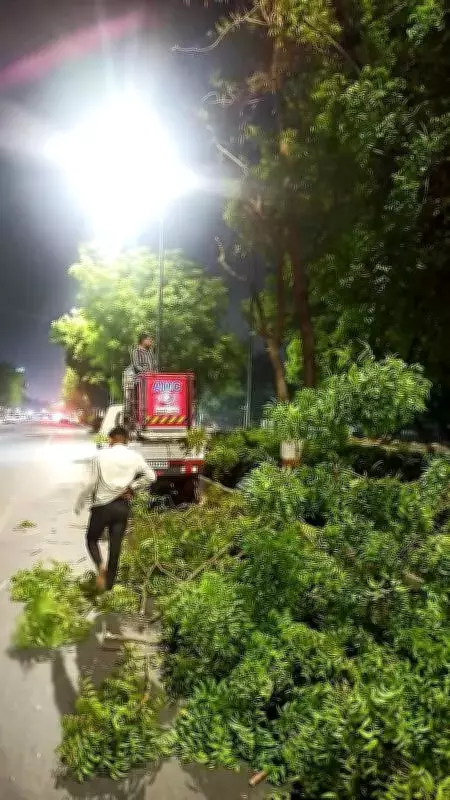
The garden department of the Ahmedabad Municipal Corporation (AMC) has come under intense criticism from residents, who allege that the pre-monsoon tree trimming carried out across the city has been excessively aggressive and harmful. Over a span of one month, more than 4,500 trees have been pruned, sparking public outrage after videos of the nighttime operations went viral on social media platforms.
Residents Raise Concerns
In the Sola area, particularly along Science City Road, locals have accused the department of stripping trees bare. They claim the trimming is not solely for safety purposes ahead of the monsoon season but is also aimed at ensuring that advertising hoardings and streetlight poles remain unobstructed. Residents warn that the scale of the pruning poses a serious threat to the survival of the trees, potentially leading to long-term damage to the city's green cover.
Official Response
Garden department director A C Patel defended the exercise, stating, "Tree trimming is carried out annually as part of pre-monsoon activities to prevent incidents of trees and branches falling during the monsoon. This year, 4,500 trees have been trimmed ahead of the season. The garden department does not trim trees unnecessarily." He emphasized that the operations are routine and necessary for public safety.

Related Incident
The controversy comes in the wake of a related incident on the same stretch of road. In March 2026, the operator of an educational institution on Sola Science City Road was found to have illegally cut 12 trees on the road divider. The cutting was reportedly done to improve the visibility of a hoarding. In response, the garden department served a notice and imposed a fine of Rs 3.2 lakh on the operator, highlighting the strict measures in place against unauthorized tree removal.
Broader Implications
This incident has reignited debates about urban tree management in Ahmedabad, with environmental activists calling for more transparent and sustainable practices. The AMC's actions, while intended to mitigate risks during the monsoon, have raised questions about the balance between safety and conservation. As the city continues to expand, the pressure on its green infrastructure is likely to increase, making such controversies more frequent.
Residents have urged the civic body to adopt less destructive trimming methods and to involve local communities in decision-making processes regarding tree maintenance. The garden department, however, maintains that its practices are in line with standard protocols and that the safety of citizens remains the top priority.






