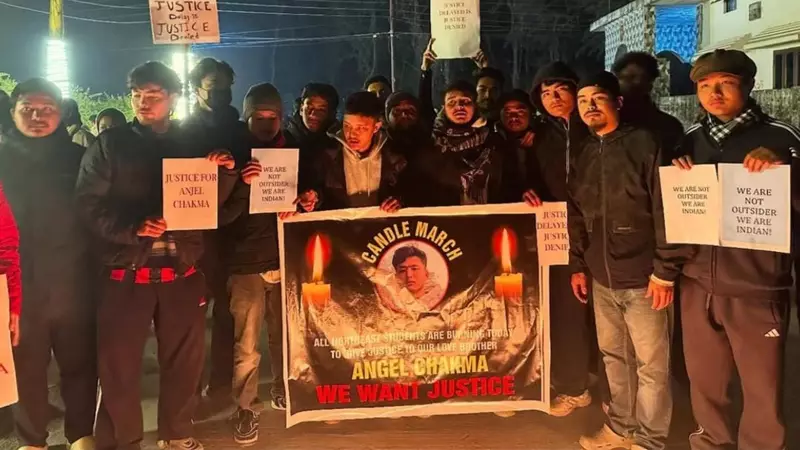
The brutal murder of Anjel Chakma, a student from Tripura, in Dehradun is not an isolated incident. It represents the horrific endpoint of a spectrum of casual, everyday racism that people from India's Northeastern states routinely endure. This normalised culture of discrimination, manifesting in slurs, social indifference, and institutional apathy, chips away at their dignity daily.
A Personal Glimpse into Institutional Indifference
Munish Tamang, a senior professor at Delhi University with 25 years of experience, recently faced a stark reminder of this pervasive bias. While invigilating an exam, a student audibly threw racist taunts like "ching-chong" at him. This occurred despite Tamang's authority as an invigilator and his role as the nodal officer for Northeast students at his college.
The incident was alarming because the perpetrator was an urban, middle-class youth at a premier university, a space shared with many Northeastern peers. His audacity to target a teacher revealed the depth of the problem. For thousands of students far from home, such harassment is a daily reality without a safety net, occurring in classrooms, neighbourhoods, and public transport.

From Daily Humiliation to Fatal Violence
The murder of Anjel Chakma follows a grim pattern, reminiscent of the 2014 killing of Nido Tania from Arunachal Pradesh in Delhi's Lajpat Nagar. These extreme acts of violence occasionally jolt the national conscience, but they are rooted in a society that tolerates daily micro-aggressions. Adjectives like "Nepali," "chinky," "momo," and "Chinese" are hurled casually, normalising otherness.
Following Nido Tania's death, the UPA II government formed the Bezbaruah Committee in 2014. Its recommendations led to some concrete steps: amending the IPC to make racial slurs a cognisable offence, creating nodal police stations and helplines like SPUNER in Delhi, appointing special prosecutors, and integrating Northeastern culture in textbooks.
Systemic Failure and the Path Forward
Despite these measures, a demonstrable institutional and political will to combat the menace is lacking. The Anjel Chakma case is a tragic example. He spent 18 days in the hospital before succumbing to his injuries, with government assurances on preventive measures coming only after his death. More disturbingly, a senior police officer was reported to have dismissed the remarks against Chakma as being "in jest," not racial—a statement that epitomises the normalisation of such hatred.
Professor Tamang's experience with the student, who offered a weak apology insisting no racist intent, underscores that perpetrators often see no consequence. The student was merely a symptom of a deep, multifaceted societal ill.
The way forward requires more than reactive policy. Institutions must implement mandatory sensitisation programs for students and staff, clearly communicating that even "harmless" name-calling is a criminal act with no place in society. Combating this ingrained racism demands consistent effort, from challenging casual jokes to addressing grievous violence, to ensure that citizens from the Northeast are not forced to live in silent acceptance.