

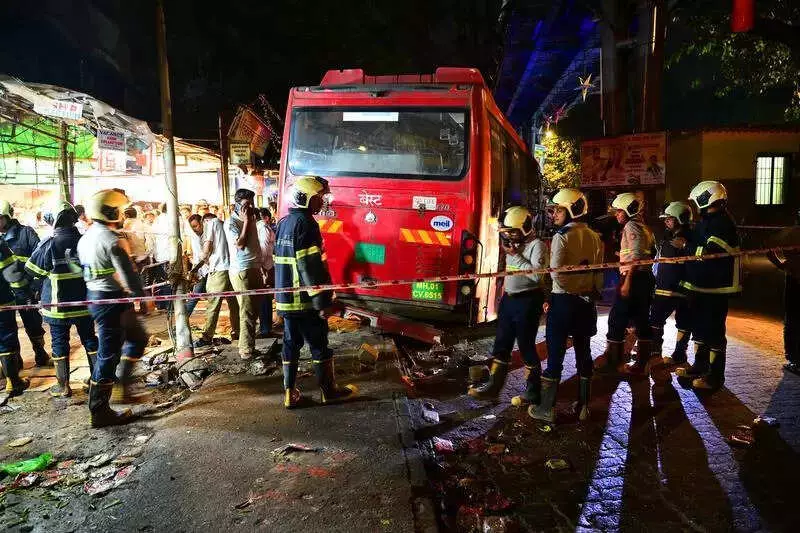
A tragic bus accident in Mumbai's Bhandup area on Monday night has reignited grave concerns over the safety protocols of the city's public transport provider, Brihanmumbai Electric Supply and Transport (BEST). The incident, which resulted in four fatalities and left ten people injured, comes just over a year after a devastating crash in December 2024 that killed nine and injured forty.
Repeated Tragedies Despite Promised Reforms
In the wake of the fatal 2024 crash, BEST had announced a series of comprehensive measures aimed at preventing such disasters. These included a two-tier training program for drivers, especially those operating the latest buses with advanced technology, conducted by wet lease operators. The undertaking also introduced simulator-based training and began implementing breathalyser tests at select depots. Furthermore, plans were afoot to finalize a uniform speed limit for all Mumbai buses, enforced by speed governors.
However, these measures have seemingly failed to curb mishaps. Transport activists point out that this is the second major fatal crash within a year, indicating a systemic failure. Statistics reveal a shocking trend: fatalities from BEST bus crashes rose by 43% and injuries by 53% in the 2024-25 period compared to the previous year. From April to September of the current financial year alone, 14 people have died and 33 have been injured in such incidents.

Calls for Accountability and Direct Action
The latest tragedy has prompted strong reactions from former officials and activists. Former BMC opposition leader and ex-BEST panel member, Ravi Raja, demanded that the administration immediately arrange a sensitisation program on road safety for every bus driver in Mumbai, irrespective of whether they are direct employees or on wet lease. He emphasized that since these buses ply with the BEST logo, the undertaking must be held accountable.
Drawing a stark comparison, another former panel member warned that BEST should not tread the path of Delhi's notorious 'killer' blueline buses, which were eventually phased out by the government. Passenger rights activist Nikhil Desai argued that driver training is a core responsibility that cannot be outsourced. "Driver training should be conducted exclusively by BEST," Desai stated, asserting that the organization cannot delegate this critical duty to contractors.
Administration's Response and On-Ground Challenges
BEST General Manager Sonia Sethi, in a conversation with TOI a few weeks prior to this accident, had outlined steps being taken. She mentioned directing staff to ensure three weeks of compulsory on-road training and road safety discipline for all drivers. Referring to the 2024 Kurla crash as an "eye-opener," Sethi asserted the undertaking's seriousness about public safety, declaring, "We have zero tolerance for bus fatalities."
A senior BEST official, however, highlighted the chaotic conditions outside railway stations as a major operational hurdle. He cited illegal hawkers, haphazardly parked vehicles, and two-wheelers as creating a stressful environment for drivers. "While drivers should be blamed for negligence, the station area should also be cleared for smoother bus movement," the official said. In a reactive move, the Bhandup station West area was cleared of hawkers on Tuesday morning, creating more space for buses to operate.
The Bhandup tragedy underscores a critical gap between policy announcements and effective implementation. As Mumbai's lifeline, the pressure is now immense on BEST to move beyond promises and demonstrate tangible, lasting improvements in driver training, discipline, and overall road safety management to restore public trust.






